It's been a long time, I expect no-one is still receiving feeds from this blog, but if you are. I'm cutting over to a new blog: http://blancavalencia.com/blog/ ...
Sunday, April 13, 2014

Sunday, January 17, 2010
To Japan with Love
I haven't blogged in about 3 years... must be that Japan inspired something in me, or maybe it's true what they said all along - blogs are for geeks...
Either way, I happend to check my spam (blog) email the other day and was happy to see that "To Japan with Love" has been published... I think this is after about 4 or 5 years in preparation - that's one aspect that blogs have the advantage over books...
Nice to see a few of my Japan articles in print... capsule hotels in Osaka, karei raisu and maratakaya (ramen in Toyama) all got the nod... on that basis alone, it must be a very good book.
Either way, I happend to check my spam (blog) email the other day and was happy to see that "To Japan with Love" has been published... I think this is after about 4 or 5 years in preparation - that's one aspect that blogs have the advantage over books...
Nice to see a few of my Japan articles in print... capsule hotels in Osaka, karei raisu and maratakaya (ramen in Toyama) all got the nod... on that basis alone, it must be a very good book.
Saturday, February 03, 2007
Restaurant Review: Più di Prima, Madrid
This Italian restaurant proclaims itself "the best in Spain"... don't know about that, our neighbourhood restaurant in London is better.
- The location - 3 (central Madrid... dark, dim... the manager's foot is in a brace, perhaps he fell over a customer).
- The service - 3 (the waiter specialised in looking at other tables while talking to us... where's the love??).
- The menu - 4 (nice traditional fare).
- The execution - 3 (overcooked pasta, over sweet semi-freddo, the osso bucco ravioli tasted like 1yr old ragù).
- The cost - 2 (€120 2 people for dinner).
Total: 15/25 (60%).
Più di Prima...
- The location - 3 (central Madrid... dark, dim... the manager's foot is in a brace, perhaps he fell over a customer).
- The service - 3 (the waiter specialised in looking at other tables while talking to us... where's the love??).
- The menu - 4 (nice traditional fare).
- The execution - 3 (overcooked pasta, over sweet semi-freddo, the osso bucco ravioli tasted like 1yr old ragù).
- The cost - 2 (€120 2 people for dinner).
Total: 15/25 (60%).
Più di Prima...
Technorati Tags: restaurant
Friday, February 02, 2007
Restaurant Review: Ølsen, Madrid
Why trust an Argentinian superchef in absentia, cooking Scandinavian food in central Madrid? IKEA does better meatballs.
- The location - 5 (central Madrid).
- The service - 2 if you're American (and 5 if you're Spanish).
- The menu - 4.
- The execution - 2 (overcooked, underseasoned, cheap cuts of meat..).
- The cost - 3 (€30 for 2 at lunch).
Total: 16/25 (a surprisingly high 64%).
Ølsen
- The location - 5 (central Madrid).
- The service - 2 if you're American (and 5 if you're Spanish).
- The menu - 4.
- The execution - 2 (overcooked, underseasoned, cheap cuts of meat..).
- The cost - 3 (€30 for 2 at lunch).
Total: 16/25 (a surprisingly high 64%).
Ølsen
Technorati Tags: restaurant madrid
Inspired by the restaurant scene...
Inspired by the restaurant scene in Spain (for better or for worse), zarzamora.blogspot has come out of its year-long hibernation. It is no longer based in Granada, but now in Madrid.
Our mission is to provide simple restaurant recommendations around the world. OK, we've got quite a bit of backlog, but here we go...
Our categories are:
- The location - accessibility, neighbourhood etc.
- The service - attention, knowledge..
- The menu - fancy, simple, interesting..
- The execution - how does it taste
- The cost - average cost
All will be rated 1 - 5: 1 "Andalucían poor" and 5 "Tokyo good".
All reviews will have a one line comment, sometimes witty, sometimes sad... but always correct.
Enjoy.
Our mission is to provide simple restaurant recommendations around the world. OK, we've got quite a bit of backlog, but here we go...
Our categories are:
- The location - accessibility, neighbourhood etc.
- The service - attention, knowledge..
- The menu - fancy, simple, interesting..
- The execution - how does it taste
- The cost - average cost
All will be rated 1 - 5: 1 "Andalucían poor" and 5 "Tokyo good".
All reviews will have a one line comment, sometimes witty, sometimes sad... but always correct.
Enjoy.
Technorati Tags: restaurant
Tuesday, May 09, 2006
Wednesday, March 01, 2006
I'm Irish, but I'm not a Leprechaun
Irish Soda Bread
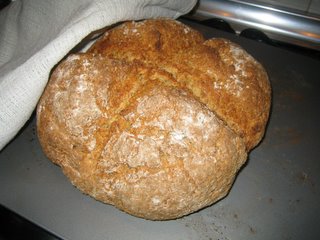
I came under a bit of flack recently for not “wearing my Irishness on my sleeve”. In an effort to redeem myself in the eyes of my compatriots I hereby bring you two pieces of my proud Irish heritage. Firstly, the unabridged and fully explained lyrics for Christy Moore´s “Lisdoonvarna”. Secondly the recipe for Irish Brown Bread (aka Irish Soda Bread), commonly eaten by American tourists and locals alike in Lisdoonvarna and all over Ireland.

How's it goin' there everybody,
From Cork, New York, Dundalk, Gortahork and Glenamaddy[i].
Here we are in the County Clare[ii]
It's a long, long way from here to there[iii].
There's the Burren and the Cliffs of Moher, [iv]
And the Tulla[v] and the Kilfenora, [vi]
Miko Russell, Doctor Bill,
Willy Clancy and Noel Hill[vii].
Flutes and fiddles everywhere.
If it's music you want,
You should go to Clare[viii].
CHORUS
Oh, Lisdoonvarna[ix]
Lisdoon, Lisdoon, Lisdoon, Lisdoonvarna!
Everybody needs a break,
Climb a mountain or jump in a lake.
Some head off to exotic places,
Others go to the Galway Races[x].
Mattie goes to the South of France,
Jim to the dogs[xi], Peter to the dance.
A cousin of mine goes potholing[xii],
A cousin of heres loves Joe Dolan[xiii].
Summer comes around each year,
We go there and they come here.
Some jet off to ... Frijiliana[xiv],
But I always go to Lisdoonvarna.
CHORUS
I always leave on a Thursday night,
With me tent and me groundsheet rolled up tight.
I like to hit Lisdoon,
In around Friday afternoon.
This gives me time to get me gear together,
I don't need to worry about the weather.
Ramble in for a pint of stout[xv],
And you'd never know who'd be hangin' about!
There's a Dutchman playing a mandolin[xvi],
And a German looking for Liam Óg O'Floinn[xvii].
And there's Adam, Bono and Garrett Fitzgerald[xviii],
Gettin' their photos taken for the Sunday World[xix].
Finbarr[xx], Charlie[xxi] and Jim Hand[xxii],
And they drinkin' pints to bate[xxiii] the band.
.. Ain't it grand?
CHORUS
The multitudes, they flocked and thronged,
To hear the music and the songs.
Motorbikes and Hi-ace[xxiv] vans,
With bottles - barrels - flagons[xxv] - cans.
Mighty craic[xxvi]. Loads of frolics,
Pioneers[xxvii] and alcoholics,
PLAC[xxviii], SPUC[xxix] and the FCA[xxx],
Free Nicky Kelly[xxxi] and the IRA.
Hairy chests and milk-white thighs,
And mickey dodgers in disguise.
Mc Graths, O'Briens, Pippins, Coxs,
Massage parlours in horse boxes.
There's amhráns[xxxii], bodhráns[xxxiii], amadáns[xxxiv],
Arab sheiks, Hindu Sikhs, Jesus freaks,
RTE[xxxv] are makin' tapes, takin' breaks and throwin' shapes.
This is heaven, this is hell.
Who cares? Who can tell?
(Anyone for the last few Choc Ices[xxxvi], now?)
CHORUS
A 747 for Jackson Browne[xxxvii],
They had to build a special runway just to get him down.
Before the Chieftains[xxxviii] could start to play,
Seven creamy pints[xxxix] came out on a tray.
Shergar[xl] was ridden by Lord Lucan[xli],
Seán Cannon[xlii] did the backstage cookin'.
Clannad[xliii] were playin' "Harry's Game",
Christy was singin' "Nancy Spain"[xliv].
Mary O'Hara[xlv] and Brush Shields[xlvi],
Together singin' "The Four Green Fields".
Van the Man[xlvii] and Emmy Lou[xlviii],
Moving Hearts[xlix] and Planxty[l] too!
CHORUS
Everybody needs a break,
Climb a mountain or jump in a lake.
Sean Doherty[li] goes to the Rose of Tralee[lii],
Oliver J. Flanagan[liii] goes swimming in the Holy Sea.
But I like the music and the open air,
So every Summer I go to Clare.
Coz Woodstock, Knock[liv] nor the Feast of Cana[lv],
Can hold a match to Lisdoonvarna.
There is only one thing more Irish than a good politically-fuelled bar song, and that is “Irish Soda Bread” (you can tell it’s Irish because it has Irish in its name). I have to thank my parents for this recipe; my Mum for baking it almost daily when we were kids and my Dad for having high cholesterol and thereby requiring it as part of his diet.
Disappointingly, I have often tried to recreate our family recipe, but failed. The bread invariably turned out too damp, too hard etc. Here is a great recipe from Maureen Tatlow’s humblingly called “Back to Basic Cookbook”.
Given that it took me many attempts to find a good recipe and get this to work, it is rather depressing that Maureen calls it a “quick ‘n easy” bread, but if it encourages you to try it.. so be it.
It is interesting, and a testament to the lady, that Maureen packs more tips and tricks into her 1 ½ pages on soda bread than all that I could find in that other noble Irish institution Ballymaloe’s “The Ballymaloe Bread Book”. Most interestingly Maureen explains the background for this national treasure. Bicarbonate of Soda didn’t arrive into Ireland until the early 19th century. It was here that, as Maureen says, it met its destiny in “wonderful tangy Irish buttermilk”. She goes onto explain the chemistry; alkaline bicarbonate combines with acidic buttermilk to create enough gas in order to raise a loaf of bread. The Irish renamed bicarbonate of soda “bread soda” and so it began…
Instructions:
Here are some of the basics that one should consider when making Irish soda bread:
Preheat the oven fully to 220C. The creation of carbon dioxide begins the instant that “wet and dry” touch. Ensure that the oven is fully preheated before you mix the ingredients.

In a large bowl mix all the dry ingredients together. Rub the butter through with your fingertips until dispersed. Make a well at the bottom and add nearly all the wet ingredients. Don’t take too long at this point as the chemical reactions are already starting.

Don’t over mix the dough. There is an inclination to over handle the bread dough. This only elongates the gluten and thereby toughens the bread. You also want to avoid dissipating the gas. It is interesting that Maureen recommends a spoon for the mixing; this lowers heat and thereby reduces gluten elongation further.
A further note on the science. It sounds like I’ve got a bit of a thing against Ballymaloe at the moment, but, hey! If you’re gonna get enemies, why not start with Cork. Their recipe also differs from Maureen’s in a number of interesting ways:
- On a like for like basis, Ballymaloe uses 36ml more milk. Most liquids (including milks) act in order to bind gluten together (toughener).
- It does not recommend the use of lemon or sugar. Both sugars and acids act as tenderizers in the formation of gluten.
- Ballymaloe recommends mixing by hand. At higher temperatures (i.e. those transmitted by the hand), gluten develops more readily through the absorption of water.
These 3 reasons could explain why the Ballymaloe bread has a tendency to turn out a little heavier and with a tougher crust… excuses, excuses.
Aim for a dough that is soft, but not sticky or sloppy. Lightly flour the worksurface and roll the dough out. Pat into a single round. Place upon a lightly floured baking tray. Cut a deep cross with a sharp knife and prod each quarter to “let the fairies out” (I have no idea where this expression came from… I’ll make something up if you like). Bake for 20 minutes at 220C before reducing to 200C for a further 20 minutes.
Check the bread is done. Tap on the underside, if it sounds hollow, it’s done.
Eat the bread quickly. Bread is best served fresh. If you don’t have that much appetite, freeze once it has cooled and sprinkle any air exposed bread regularly to prevent the crust becoming too hard.
Calories are all in vogue at home at the moment (something to do with 1 month of Christmas diet followed by 1 month of Central American diet). I did a bit of investigation; it seems that Irish Soda Bread contains about 140 kcal per slice.
So… there we are… my attempt to put my Irishness back on my sleeve. I hope that I’ve succeeded, and I’ve failed… well, you can just feck off…
--------------- eh, rather extensive footnotes ----------------
[i] Cities in Ireland. Cork is the second largest in Ireland, with a population of 123,062. Dundalk in Louth, Gortahork in Donegal and Glenamaddy in Galway. New York is a city in North America.
[ii] One of the 32 counties of Ireland; located on the west coast
[iii] Possible reference to the famous 1912 marching song; “It's A Long Way To Tipperary”.
[iv] References to famous natural sites in County Clare. The Burren is approximately 300km square of limestone rocks. The Cliffs of Moher rise 120m from the Atlantic Ocean. AKA: The “cliffs of insanity” in the movie “The Princess Bride”.
[v] Taken from the Offical Ireland Mid West website; In Tulla, "There is also a Post Office (doubling as a souvenir shop) and a library - please note, the opening hours are peculiar"... say no more.
[vi] Kilfenora is a town of historical importance in County Clare, it is the site of an early monastic settlement.
[vii] Famous Irish fiddlers.
[viii] Reference to the famous music feastival of Lisdoonvarna that ran in the years from 1978 to 1983.
[ix] Town in County Clare, famous for having a Christy Moore song written about it, its spa, music feastivals and a matchmaking contest in September every year.
[x] On the last Monday of every July Galway hosts the famous horse-racing feastival. This is a seven-day race meet.
[xi] Dog racing; famous in Ireland.
[xii] Activity of swimming in underground caves. Particularly prevelant in the Burren area, Co. Clare.
[xiii] Famous Irish singer. Wikipedia mentions that he was, interestingly, one of the first Western artists to perform in Russia.
[xiv] Frijiliana, town in Malaga. Malaga receives a great number of Irish visitors every year, looking to enjoy some sun and fine local Pizzas.
[xv] Dark beer made from roasted malts or barley. It originated in Ireland. The most famous is a small local brew called “Guinness”, first brewed in 1756 in Leixlip.
[xvi] Don’t get too excited; reference to the musical instrument rather than the culinary slicing instrument.
[xvii] Famous Irish musician of Uilleann pipes and whistle. Has recorded with Christy Moore.
[xviii] Famous Irish musician, ego and former Taoiseach.
[xix] Ireland’s first and still leading (in terms of sales if not content) tabloid.
[xx] Finbarr Harte, Irish country star. He may be one of Ireland’s greatest country stars as he is included on a CD of 40 country stars called “Ireland’s Greatest Country Stars”.
[xxi] Charles Haughey, former Taoiseach of three terms. His lifestyle has been revealed as somewhat extravagent and receipts of more than 8million pounds in donations somewhat illegal.
[xxii] Irish music promoter.
[xxiii] Colloquialism of “beat”.
[xxiv] Line of Toyota vans popular for their size and ability to carry large quantities of rubbish, drink and people... most often in that order.
[xxv] Popular measure of spirits in Ireland; thought to be 70 cl, but opinions vary, probably due to the timing of the question.
[xxvi] Meaning fun or enjoyment, or a impure version of cocaine that contains water and “cracks” when heated. Apparently derived from the English use “to crack a joke”, although this may be a case of the English simply claiming credit for a great Irish invention... (that’ll go down well at home).
[xxvii] Irish teetotalers... limited popularity.
[xxviii] Pro-life Amendment Campaign (PLAC), pro-life lobby group that surfaced during the 1983 abortion referendum in Ireland with the aim of asserting the explicit right to life of the foetus, equal to that of pregnant women.
[xxix] Society for the Protection of Unborn Children, UK pro-life organisation opposed to abortions .
[xxx] Fórsa Cosanta Áitiúil, the Reserve Defence Force of the Irish army
[xxxi] Famous for the 1983 hunger strike in defence of his innocence.
[xxxii] Irish for “song”.
[xxxiii] Irish open drum, played vertically on the knee.
[xxxiv] Irish for “fool”.
[xxxv] Radio Telefís Éireann, Ireland´s publicly funded broadcaster.
[xxxvi] Generic name for the Klondike Bar, a dessert consisting of vanilla ice cream square coated with a layer of thin chocolate.
[xxxvii] Influential American singer-songwriter, famously played at the Lisdoonvarna music feastival.
[xxxviii] Irish musical group famous for playing traditional music.
[xxxix] Frequent serving measure for previously mention stout.
[xl] Famous Irish racehorse, winner of the 1981 Epsom Derby. Kidnapped in 1983, rumoured by the IRA, and never found.
[xli] Earl of Lucan. The 7th Earl famously went missing in 1973 and has never been seen again. Declared dead by the High Court in 1999.
[xlii] Lead vocal and guitar for the Dubliners.
[xliii] Irish folk music band famous for the theme tune to Robin of Sherwood, the theme to Harry's Game and sprouting Eithne Ní Bhraonáin (Enya).
[xliv] Famous English journalist of the 50´s and 60´s who died in a light aircraft accident on the way to the Grand National.
[xlv] Canadian singer-songwriter.
[xlvi] Irish singer-songwriter.
[xlvii] Van Morrison, Irish singer song-writer. “Jackie Wilson Said (I'm In Heaven When You Smile)” features amongst his songs.
[xlviii] Emmylou Harris, country music singer from Alabama, USA. Released the Daniel Lanois produced “Wrecking Ball” in 1995.
[xlix] Irish folk-rock band of the eighties, Christy Moore was a founder member.
[l] Irish folk-rock band of the seventies, Christy Moore was a founder member.
[li] Former Minister Justice in the Haughey government of 1982. He resigned when it was revealed that he had authorised phone tappings of two journalists. Haughey resigned as leader of Fianna Fáil and subsequently as Taoiseach when it was revealed that he knew of the tappings.
[lii] International beauty competition hosted in Tralee every year.
[liii] Famous right-wing politicion in the Dáil from 1943 to 1987.
[liv] The Virgin Mary, St Joseph and St John the Evangelist were rumoured to have appeared in Knock in 1879. It has since enjoyed the visits of about half a million pilgrims annually.
[lv] Marriage feast where a young man was rumoured to have turned water into wine.
[lvi] Irish slang for head butt. Although probably not in this context.

I came under a bit of flack recently for not “wearing my Irishness on my sleeve”. In an effort to redeem myself in the eyes of my compatriots I hereby bring you two pieces of my proud Irish heritage. Firstly, the unabridged and fully explained lyrics for Christy Moore´s “Lisdoonvarna”. Secondly the recipe for Irish Brown Bread (aka Irish Soda Bread), commonly eaten by American tourists and locals alike in Lisdoonvarna and all over Ireland.

So that you can all get your bearings.. this is what a Spanish person looks like inside a pub in Lisdoonvarna
How's it goin' there everybody,
From Cork, New York, Dundalk, Gortahork and Glenamaddy[i].
Here we are in the County Clare[ii]
It's a long, long way from here to there[iii].
There's the Burren and the Cliffs of Moher, [iv]
And the Tulla[v] and the Kilfenora, [vi]
Miko Russell, Doctor Bill,
Willy Clancy and Noel Hill[vii].
Flutes and fiddles everywhere.
If it's music you want,
You should go to Clare[viii].
CHORUS
Oh, Lisdoonvarna[ix]
Lisdoon, Lisdoon, Lisdoon, Lisdoonvarna!
Everybody needs a break,
Climb a mountain or jump in a lake.
Some head off to exotic places,
Others go to the Galway Races[x].
Mattie goes to the South of France,
Jim to the dogs[xi], Peter to the dance.
A cousin of mine goes potholing[xii],
A cousin of heres loves Joe Dolan[xiii].
Summer comes around each year,
We go there and they come here.
Some jet off to ... Frijiliana[xiv],
But I always go to Lisdoonvarna.
CHORUS
I always leave on a Thursday night,
With me tent and me groundsheet rolled up tight.
I like to hit Lisdoon,
In around Friday afternoon.
This gives me time to get me gear together,
I don't need to worry about the weather.
Ramble in for a pint of stout[xv],
And you'd never know who'd be hangin' about!
There's a Dutchman playing a mandolin[xvi],
And a German looking for Liam Óg O'Floinn[xvii].
And there's Adam, Bono and Garrett Fitzgerald[xviii],
Gettin' their photos taken for the Sunday World[xix].
Finbarr[xx], Charlie[xxi] and Jim Hand[xxii],
And they drinkin' pints to bate[xxiii] the band.
.. Ain't it grand?
CHORUS
The multitudes, they flocked and thronged,
To hear the music and the songs.
Motorbikes and Hi-ace[xxiv] vans,
With bottles - barrels - flagons[xxv] - cans.
Mighty craic[xxvi]. Loads of frolics,
Pioneers[xxvii] and alcoholics,
PLAC[xxviii], SPUC[xxix] and the FCA[xxx],
Free Nicky Kelly[xxxi] and the IRA.
Hairy chests and milk-white thighs,
And mickey dodgers in disguise.
Mc Graths, O'Briens, Pippins, Coxs,
Massage parlours in horse boxes.
There's amhráns[xxxii], bodhráns[xxxiii], amadáns[xxxiv],
Arab sheiks, Hindu Sikhs, Jesus freaks,
RTE[xxxv] are makin' tapes, takin' breaks and throwin' shapes.
This is heaven, this is hell.
Who cares? Who can tell?
(Anyone for the last few Choc Ices[xxxvi], now?)
CHORUS
A 747 for Jackson Browne[xxxvii],
They had to build a special runway just to get him down.
Before the Chieftains[xxxviii] could start to play,
Seven creamy pints[xxxix] came out on a tray.
Shergar[xl] was ridden by Lord Lucan[xli],
Seán Cannon[xlii] did the backstage cookin'.
Clannad[xliii] were playin' "Harry's Game",
Christy was singin' "Nancy Spain"[xliv].
Mary O'Hara[xlv] and Brush Shields[xlvi],
Together singin' "The Four Green Fields".
Van the Man[xlvii] and Emmy Lou[xlviii],
Moving Hearts[xlix] and Planxty[l] too!
CHORUS
Everybody needs a break,
Climb a mountain or jump in a lake.
Sean Doherty[li] goes to the Rose of Tralee[lii],
Oliver J. Flanagan[liii] goes swimming in the Holy Sea.
But I like the music and the open air,
So every Summer I go to Clare.
Coz Woodstock, Knock[liv] nor the Feast of Cana[lv],
Can hold a match to Lisdoonvarna.
There is only one thing more Irish than a good politically-fuelled bar song, and that is “Irish Soda Bread” (you can tell it’s Irish because it has Irish in its name). I have to thank my parents for this recipe; my Mum for baking it almost daily when we were kids and my Dad for having high cholesterol and thereby requiring it as part of his diet.
Disappointingly, I have often tried to recreate our family recipe, but failed. The bread invariably turned out too damp, too hard etc. Here is a great recipe from Maureen Tatlow’s humblingly called “Back to Basic Cookbook”.
Recipe (makes 1 small loaf[lvi])
450 g flour (½ plain flour and ½ wholemeal)
1 tsp salt
1 level tsp bread soda
1 tsp caster sugar
30 g butter
300 ml buttermilk (or natural yogurt, milk and lemon juice)
450 g flour (½ plain flour and ½ wholemeal)
1 tsp salt
1 level tsp bread soda
1 tsp caster sugar
30 g butter
300 ml buttermilk (or natural yogurt, milk and lemon juice)
Given that it took me many attempts to find a good recipe and get this to work, it is rather depressing that Maureen calls it a “quick ‘n easy” bread, but if it encourages you to try it.. so be it.
It is interesting, and a testament to the lady, that Maureen packs more tips and tricks into her 1 ½ pages on soda bread than all that I could find in that other noble Irish institution Ballymaloe’s “The Ballymaloe Bread Book”. Most interestingly Maureen explains the background for this national treasure. Bicarbonate of Soda didn’t arrive into Ireland until the early 19th century. It was here that, as Maureen says, it met its destiny in “wonderful tangy Irish buttermilk”. She goes onto explain the chemistry; alkaline bicarbonate combines with acidic buttermilk to create enough gas in order to raise a loaf of bread. The Irish renamed bicarbonate of soda “bread soda” and so it began…
Instructions:
Here are some of the basics that one should consider when making Irish soda bread:
Preheat the oven fully to 220C. The creation of carbon dioxide begins the instant that “wet and dry” touch. Ensure that the oven is fully preheated before you mix the ingredients.
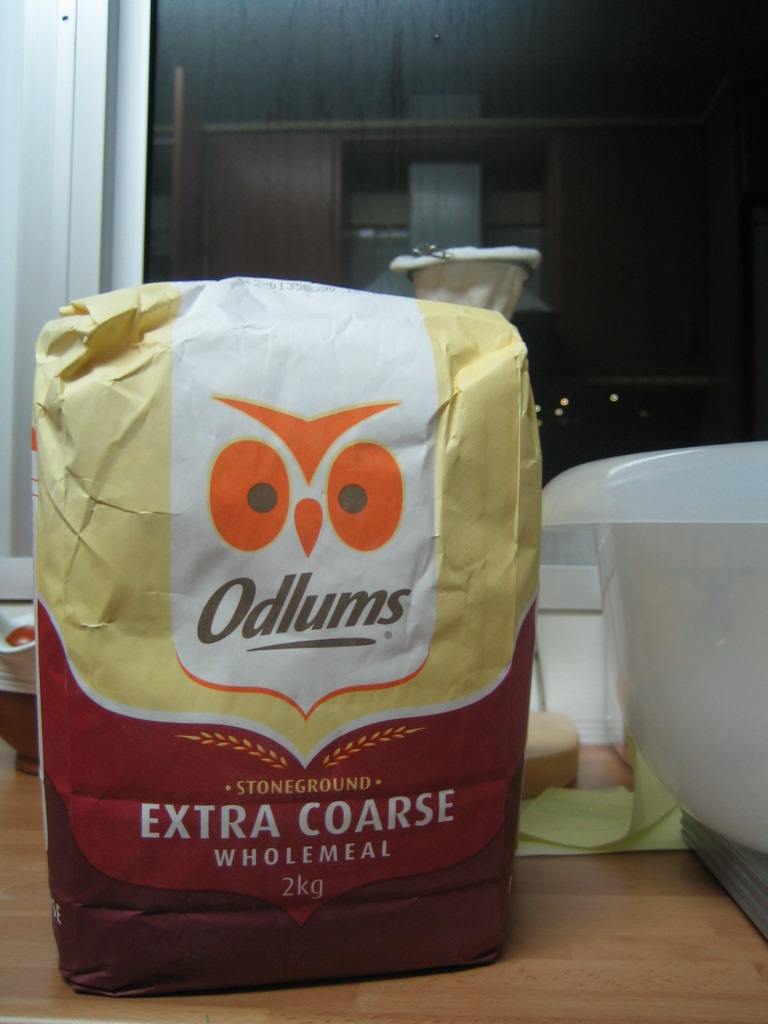
They say that only real Irish wholemeal can be used to make Irish Soda Bread. This may be a rumour spread by the manufacturer... either way the owl is pretty fierce looking.
In a large bowl mix all the dry ingredients together. Rub the butter through with your fingertips until dispersed. Make a well at the bottom and add nearly all the wet ingredients. Don’t take too long at this point as the chemical reactions are already starting.

Note the flagrant disregard for instructions.
Don’t over mix the dough. There is an inclination to over handle the bread dough. This only elongates the gluten and thereby toughens the bread. You also want to avoid dissipating the gas. It is interesting that Maureen recommends a spoon for the mixing; this lowers heat and thereby reduces gluten elongation further.
A further note on the science. It sounds like I’ve got a bit of a thing against Ballymaloe at the moment, but, hey! If you’re gonna get enemies, why not start with Cork. Their recipe also differs from Maureen’s in a number of interesting ways:
- On a like for like basis, Ballymaloe uses 36ml more milk. Most liquids (including milks) act in order to bind gluten together (toughener).
- It does not recommend the use of lemon or sugar. Both sugars and acids act as tenderizers in the formation of gluten.
- Ballymaloe recommends mixing by hand. At higher temperatures (i.e. those transmitted by the hand), gluten develops more readily through the absorption of water.
These 3 reasons could explain why the Ballymaloe bread has a tendency to turn out a little heavier and with a tougher crust… excuses, excuses.
Aim for a dough that is soft, but not sticky or sloppy. Lightly flour the worksurface and roll the dough out. Pat into a single round. Place upon a lightly floured baking tray. Cut a deep cross with a sharp knife and prod each quarter to “let the fairies out” (I have no idea where this expression came from… I’ll make something up if you like). Bake for 20 minutes at 220C before reducing to 200C for a further 20 minutes.
Check the bread is done. Tap on the underside, if it sounds hollow, it’s done.
Eat the bread quickly. Bread is best served fresh. If you don’t have that much appetite, freeze once it has cooled and sprinkle any air exposed bread regularly to prevent the crust becoming too hard.
Calories are all in vogue at home at the moment (something to do with 1 month of Christmas diet followed by 1 month of Central American diet). I did a bit of investigation; it seems that Irish Soda Bread contains about 140 kcal per slice.
So… there we are… my attempt to put my Irishness back on my sleeve. I hope that I’ve succeeded, and I’ve failed… well, you can just feck off…
--------------- eh, rather extensive footnotes ----------------
[i] Cities in Ireland. Cork is the second largest in Ireland, with a population of 123,062. Dundalk in Louth, Gortahork in Donegal and Glenamaddy in Galway. New York is a city in North America.
[ii] One of the 32 counties of Ireland; located on the west coast
[iii] Possible reference to the famous 1912 marching song; “It's A Long Way To Tipperary”.
[iv] References to famous natural sites in County Clare. The Burren is approximately 300km square of limestone rocks. The Cliffs of Moher rise 120m from the Atlantic Ocean. AKA: The “cliffs of insanity” in the movie “The Princess Bride”.
[v] Taken from the Offical Ireland Mid West website; In Tulla, "There is also a Post Office (doubling as a souvenir shop) and a library - please note, the opening hours are peculiar"... say no more.
[vi] Kilfenora is a town of historical importance in County Clare, it is the site of an early monastic settlement.
[vii] Famous Irish fiddlers.
[viii] Reference to the famous music feastival of Lisdoonvarna that ran in the years from 1978 to 1983.
[ix] Town in County Clare, famous for having a Christy Moore song written about it, its spa, music feastivals and a matchmaking contest in September every year.
[x] On the last Monday of every July Galway hosts the famous horse-racing feastival. This is a seven-day race meet.
[xi] Dog racing; famous in Ireland.
[xii] Activity of swimming in underground caves. Particularly prevelant in the Burren area, Co. Clare.
[xiii] Famous Irish singer. Wikipedia mentions that he was, interestingly, one of the first Western artists to perform in Russia.
[xiv] Frijiliana, town in Malaga. Malaga receives a great number of Irish visitors every year, looking to enjoy some sun and fine local Pizzas.
[xv] Dark beer made from roasted malts or barley. It originated in Ireland. The most famous is a small local brew called “Guinness”, first brewed in 1756 in Leixlip.
[xvi] Don’t get too excited; reference to the musical instrument rather than the culinary slicing instrument.
[xvii] Famous Irish musician of Uilleann pipes and whistle. Has recorded with Christy Moore.
[xviii] Famous Irish musician, ego and former Taoiseach.
[xix] Ireland’s first and still leading (in terms of sales if not content) tabloid.
[xx] Finbarr Harte, Irish country star. He may be one of Ireland’s greatest country stars as he is included on a CD of 40 country stars called “Ireland’s Greatest Country Stars”.
[xxi] Charles Haughey, former Taoiseach of three terms. His lifestyle has been revealed as somewhat extravagent and receipts of more than 8million pounds in donations somewhat illegal.
[xxii] Irish music promoter.
[xxiii] Colloquialism of “beat”.
[xxiv] Line of Toyota vans popular for their size and ability to carry large quantities of rubbish, drink and people... most often in that order.
[xxv] Popular measure of spirits in Ireland; thought to be 70 cl, but opinions vary, probably due to the timing of the question.
[xxvi] Meaning fun or enjoyment, or a impure version of cocaine that contains water and “cracks” when heated. Apparently derived from the English use “to crack a joke”, although this may be a case of the English simply claiming credit for a great Irish invention... (that’ll go down well at home).
[xxvii] Irish teetotalers... limited popularity.
[xxviii] Pro-life Amendment Campaign (PLAC), pro-life lobby group that surfaced during the 1983 abortion referendum in Ireland with the aim of asserting the explicit right to life of the foetus, equal to that of pregnant women.
[xxix] Society for the Protection of Unborn Children, UK pro-life organisation opposed to abortions .
[xxx] Fórsa Cosanta Áitiúil, the Reserve Defence Force of the Irish army
[xxxi] Famous for the 1983 hunger strike in defence of his innocence.
[xxxii] Irish for “song”.
[xxxiii] Irish open drum, played vertically on the knee.
[xxxiv] Irish for “fool”.
[xxxv] Radio Telefís Éireann, Ireland´s publicly funded broadcaster.
[xxxvi] Generic name for the Klondike Bar, a dessert consisting of vanilla ice cream square coated with a layer of thin chocolate.
[xxxvii] Influential American singer-songwriter, famously played at the Lisdoonvarna music feastival.
[xxxviii] Irish musical group famous for playing traditional music.
[xxxix] Frequent serving measure for previously mention stout.
[xl] Famous Irish racehorse, winner of the 1981 Epsom Derby. Kidnapped in 1983, rumoured by the IRA, and never found.
[xli] Earl of Lucan. The 7th Earl famously went missing in 1973 and has never been seen again. Declared dead by the High Court in 1999.
[xlii] Lead vocal and guitar for the Dubliners.
[xliii] Irish folk music band famous for the theme tune to Robin of Sherwood, the theme to Harry's Game and sprouting Eithne Ní Bhraonáin (Enya).
[xliv] Famous English journalist of the 50´s and 60´s who died in a light aircraft accident on the way to the Grand National.
[xlv] Canadian singer-songwriter.
[xlvi] Irish singer-songwriter.
[xlvii] Van Morrison, Irish singer song-writer. “Jackie Wilson Said (I'm In Heaven When You Smile)” features amongst his songs.
[xlviii] Emmylou Harris, country music singer from Alabama, USA. Released the Daniel Lanois produced “Wrecking Ball” in 1995.
[xlix] Irish folk-rock band of the eighties, Christy Moore was a founder member.
[l] Irish folk-rock band of the seventies, Christy Moore was a founder member.
[li] Former Minister Justice in the Haughey government of 1982. He resigned when it was revealed that he had authorised phone tappings of two journalists. Haughey resigned as leader of Fianna Fáil and subsequently as Taoiseach when it was revealed that he knew of the tappings.
[lii] International beauty competition hosted in Tralee every year.
[liii] Famous right-wing politicion in the Dáil from 1943 to 1987.
[liv] The Virgin Mary, St Joseph and St John the Evangelist were rumoured to have appeared in Knock in 1879. It has since enjoyed the visits of about half a million pilgrims annually.
[lv] Marriage feast where a young man was rumoured to have turned water into wine.
[lvi] Irish slang for head butt. Although probably not in this context.
Sunday, February 12, 2006
I'm not kiddin it's like an orange on a toothpick
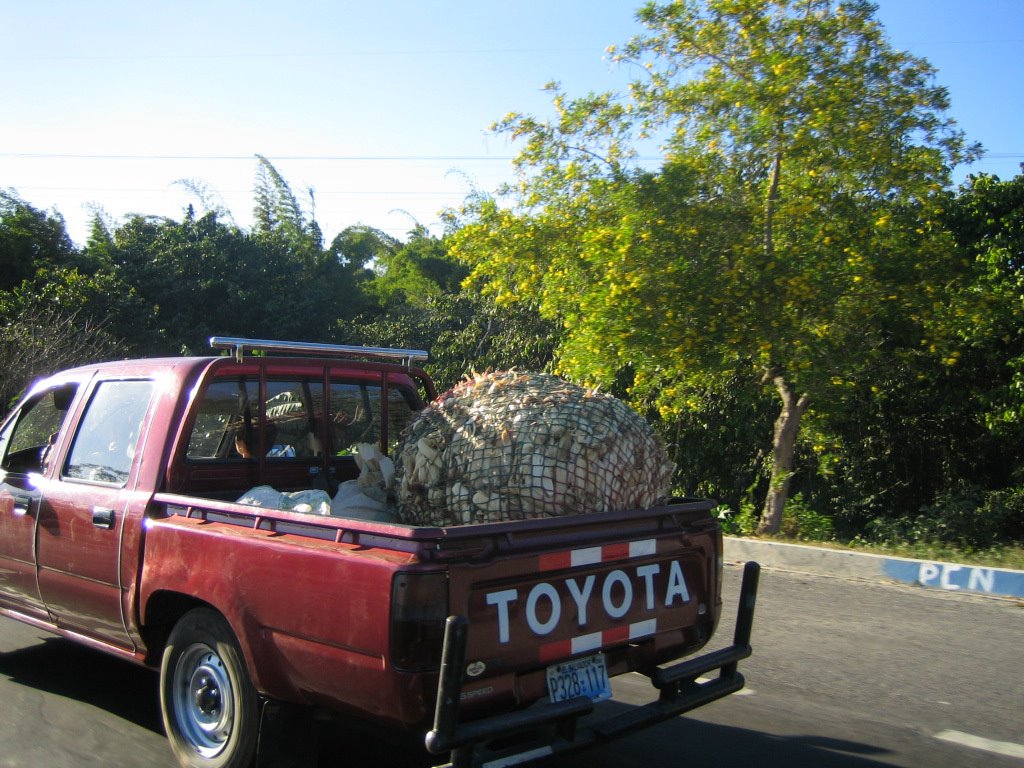
What luck! Coming back from Suchitoto today we happened across the largest cauliflower in the world. It was returning after winning the contest that I can only assume took place somewhere in the west of El Salvador. Not only was it the largest, it was also the smartest; it was able to give us directions through San Martin in order that we could avoid a FMLN party.
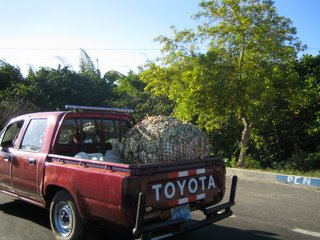
Suchitoto was founded by the Spanish in the 16th century. It was the original capital of El Salvador until it was moved to the present-day, San Salvador, located in the Valle de las Hamacas (Valley of the Hammocks). It is well worth the visit for the beautiful, church, colonial buildings and the excellent restaurant "Los Almendros de San Lorenzo".
Suchitoto was founded by the Spanish in the 16th century. It was the original capital of El Salvador until it was moved to the present-day, San Salvador, located in the Valle de las Hamacas (Valley of the Hammocks). It is well worth the visit for the beautiful, church, colonial buildings and the excellent restaurant "Los Almendros de San Lorenzo".
Sunday, February 05, 2006
ZICO... even better than the real thing
ZICO takes water to a whole new level
ZICO is 100% pure coconut water with natural flavor essences. With five essential electrolytes, more potassium than a banana, low acidity, no fat, no sugar added, and no cholesterol, ZICO is the natural, refreshing way to hydrate and replenish. Drink a ZICO and live it.
On the way to the town of Panchimalco, in the outskirts of San Salvador, a local coconut seller was able to give us the perhaps even more natural equivalent to ZICO. Although it did not come in a blue carton, he swore that it was just as natural as its stateside competitor.
He didn´t have any graphs demonstrating its beneficial effect on the human body, neither could he quote any suitably firey slogan. He must have sensed my scepticism as he immediately tried to prove the heritage of his product. He told us how each morning he climbs the nearby trees (think of this as the local convenience store) and picks choice coconuts. He loads these into his van and spends the day selling to the locals and random Irish people that stumble his way.
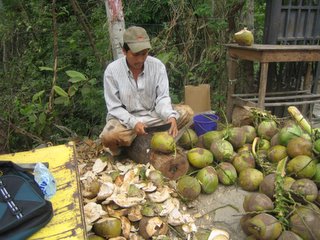
Whilst he was not able to produce any certificates to back up his somewhat extravagant claims, he did have a large knife so I thought it best to agree. Since going to his retail outlet, I have been impressed at the size of his franchise; travelling through El Salvador and even into Guatemala I have seen a number of his roadside shops...
If you aren´t lucky enough to have a conveniently available coconut tree, you can buy ZICO online at ZICO.com.
ZICO is 100% pure coconut water with natural flavor essences. With five essential electrolytes, more potassium than a banana, low acidity, no fat, no sugar added, and no cholesterol, ZICO is the natural, refreshing way to hydrate and replenish. Drink a ZICO and live it.

On the way to the town of Panchimalco, in the outskirts of San Salvador, a local coconut seller was able to give us the perhaps even more natural equivalent to ZICO. Although it did not come in a blue carton, he swore that it was just as natural as its stateside competitor.
He didn´t have any graphs demonstrating its beneficial effect on the human body, neither could he quote any suitably firey slogan. He must have sensed my scepticism as he immediately tried to prove the heritage of his product. He told us how each morning he climbs the nearby trees (think of this as the local convenience store) and picks choice coconuts. He loads these into his van and spends the day selling to the locals and random Irish people that stumble his way.

Whilst he was not able to produce any certificates to back up his somewhat extravagant claims, he did have a large knife so I thought it best to agree. Since going to his retail outlet, I have been impressed at the size of his franchise; travelling through El Salvador and even into Guatemala I have seen a number of his roadside shops...
If you aren´t lucky enough to have a conveniently available coconut tree, you can buy ZICO online at ZICO.com.
Monday, January 30, 2006
Platform 9 ¾ for the Central Food Market of San Salvador
The other day we went for the morning to the central market of Salvador. The market is located at 6 Calle Oriente, between 23 and 27 Avenida Sur in the neighbourhood of La Mermeja. Another slightly more unfortunate (but relevant) landmark is that of the General Cemetary.

Little did I realise that I was in fact going to a place that doesn´t seem to exist. It´s the Hogwarts of food markets. The reason for this is that, outside of the market itself, it is extremely difficult to find information or reference to its existence. The web speaks very little of it and more surprisingly local blogs (admittedly these seem to be mostly written by North Americans) don´t mention this jewel of markets. Ever since going to the market, I have been part pleased and part distressed by the shock of locals when they are told. Two factors seem to cause this reaction and both reflect problems that lie at the heart of the drive to develop and open the market of El Salvador. .
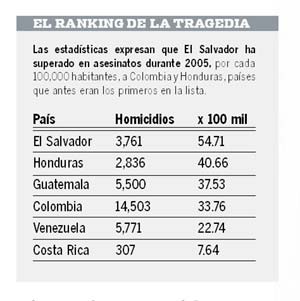
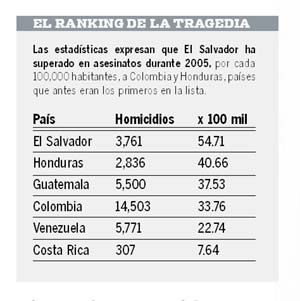
Firstly, you can not mention El Salvador without referring to the gang problems that it is currently facing. La Prensa Grafica [i] recently reported on the murder rates in Latin America. El Salvador did not fair well. The murder rate in El Salvador is approximately 55 per 100,000. Comparison rates are Honduras 41, Guatemala 38, Colombia 34, Venezuela 23, Costa Rica 8. Yesterday a marero (gang member) was shot dead while eating shellfish in the market. Interestingly, the murder rate for Washington D.C. is 47, Spain and Ireland both sit at 2 murders per 100,000.
Secondly, the disparity amongst the populations of El Salvador also goes some way to explaining this lack of information. The poverty rate [ii] has fallen from 60% in 1991, but with a rate of 35% households in poverty, it is still a country of disparities. In the past years the development seems to have slowed, El Salvador ranked 103 in 2000 in the Index of Human Development, 5 years later it sat at 104. This is most simply illustrated in where some parts of the population shop and where others only dream of. Although the trip to the central market is only 15 minutes, it is a journey that is seldom, if ever, made by some locals.
The market that doesn´t exist is located in the center of San Salvador. The surrounding streets are a collection of free market stands, cd copies and parking lots. The market itself is arranged over the interior two floors. You enter at the bottom into what is the predominant food section of the market.
Here are some of the highlights of the market...
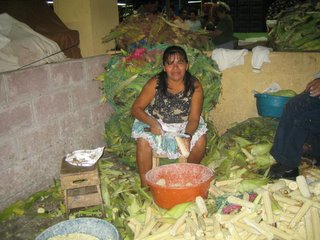
Corn being stripped and prepared in order to make tortillas
After they are boiled, ground and used to make pupusas.
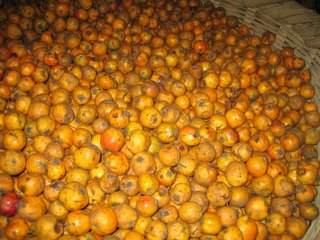
Manzanillas. This is the Castillan for chamomile, but in El Salvador relates to a small apple fruit.
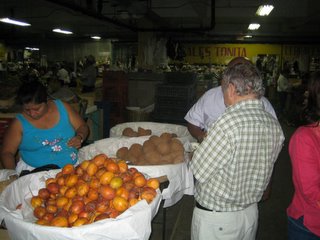
Granadilla. More familiarly known as a variety of the passion fruit. This exotic fruit´s seeds are eaten. El Salvador promotes the export of this fruit, particularly to the southern regions of Mexico.

Toilets. You can enter the toilets with paper or without. It costs 10 cents, and could be considered a wise investment.

Pacaya. This is the flower of the Palmácea; the palm tree. These are typically [iii] cooked, sliced down the center, stuffed with cheese and cream. We had them for lunch today, “unusual” was the general response.

Casco de Morro (on the left). The well-known horchata from Spain is made with chufas. That of El Salvador is made from the seed of morro, rice, sugar, pumpkin seeds, ground cocoa, cinnamon and sesame seeds. The empty morro shells can be used to make everything from candle holders to maracas... the latter are more tuneful. Here is a simple recipe for horchata:
Toast the rice slowly. Add the other ingredients and leave to golden. Grind all the ingredients. This may be stored in sealed bags for as long as you require. When you want to prepare the drink, use 2 dsp to one glass of liquid. For a litre use 3 cups of water, 1 of milk and 8 spoons of powder.
Casco de Armadillo (on the right in the above photo).
Crunchy on the outside; for the previous occupant, tragically empty on the inside.

The church of Calvario of San Salvador. This forms part of the view from the upper floor of the market... just behind the pupusa stands.
Sources:
[i] Tim´s blog
[ii] ANEP Asociación Nacional de la Empresa Privada; ENADE 2005
[iii] Rellenos de Pacayas

Little did I realise that I was in fact going to a place that doesn´t seem to exist. It´s the Hogwarts of food markets. The reason for this is that, outside of the market itself, it is extremely difficult to find information or reference to its existence. The web speaks very little of it and more surprisingly local blogs (admittedly these seem to be mostly written by North Americans) don´t mention this jewel of markets. Ever since going to the market, I have been part pleased and part distressed by the shock of locals when they are told. Two factors seem to cause this reaction and both reflect problems that lie at the heart of the drive to develop and open the market of El Salvador. .
Firstly, you can not mention El Salvador without referring to the gang problems that it is currently facing. La Prensa Grafica [i] recently reported on the murder rates in Latin America. El Salvador did not fair well. The murder rate in El Salvador is approximately 55 per 100,000. Comparison rates are Honduras 41, Guatemala 38, Colombia 34, Venezuela 23, Costa Rica 8. Yesterday a marero (gang member) was shot dead while eating shellfish in the market. Interestingly, the murder rate for Washington D.C. is 47, Spain and Ireland both sit at 2 murders per 100,000.
Secondly, the disparity amongst the populations of El Salvador also goes some way to explaining this lack of information. The poverty rate [ii] has fallen from 60% in 1991, but with a rate of 35% households in poverty, it is still a country of disparities. In the past years the development seems to have slowed, El Salvador ranked 103 in 2000 in the Index of Human Development, 5 years later it sat at 104. This is most simply illustrated in where some parts of the population shop and where others only dream of. Although the trip to the central market is only 15 minutes, it is a journey that is seldom, if ever, made by some locals.
The market that doesn´t exist is located in the center of San Salvador. The surrounding streets are a collection of free market stands, cd copies and parking lots. The market itself is arranged over the interior two floors. You enter at the bottom into what is the predominant food section of the market.
Here are some of the highlights of the market...

Corn being stripped and prepared in order to make tortillas
After they are boiled, ground and used to make pupusas.
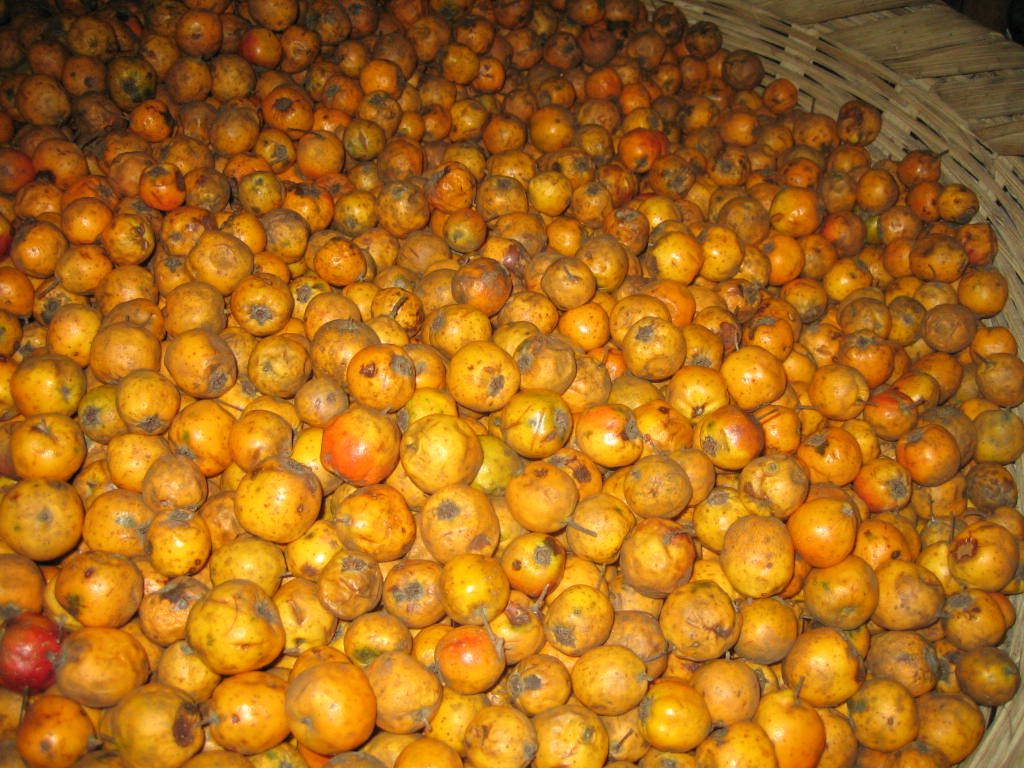
Manzanillas. This is the Castillan for chamomile, but in El Salvador relates to a small apple fruit.

Granadilla. More familiarly known as a variety of the passion fruit. This exotic fruit´s seeds are eaten. El Salvador promotes the export of this fruit, particularly to the southern regions of Mexico.
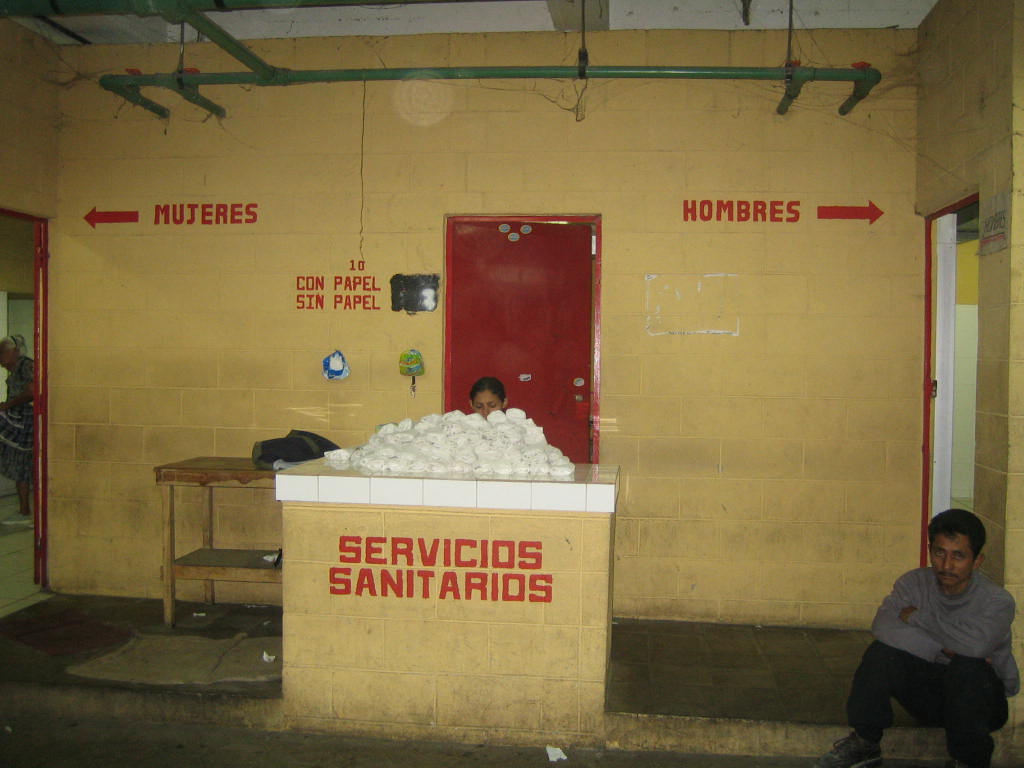
Toilets. You can enter the toilets with paper or without. It costs 10 cents, and could be considered a wise investment.
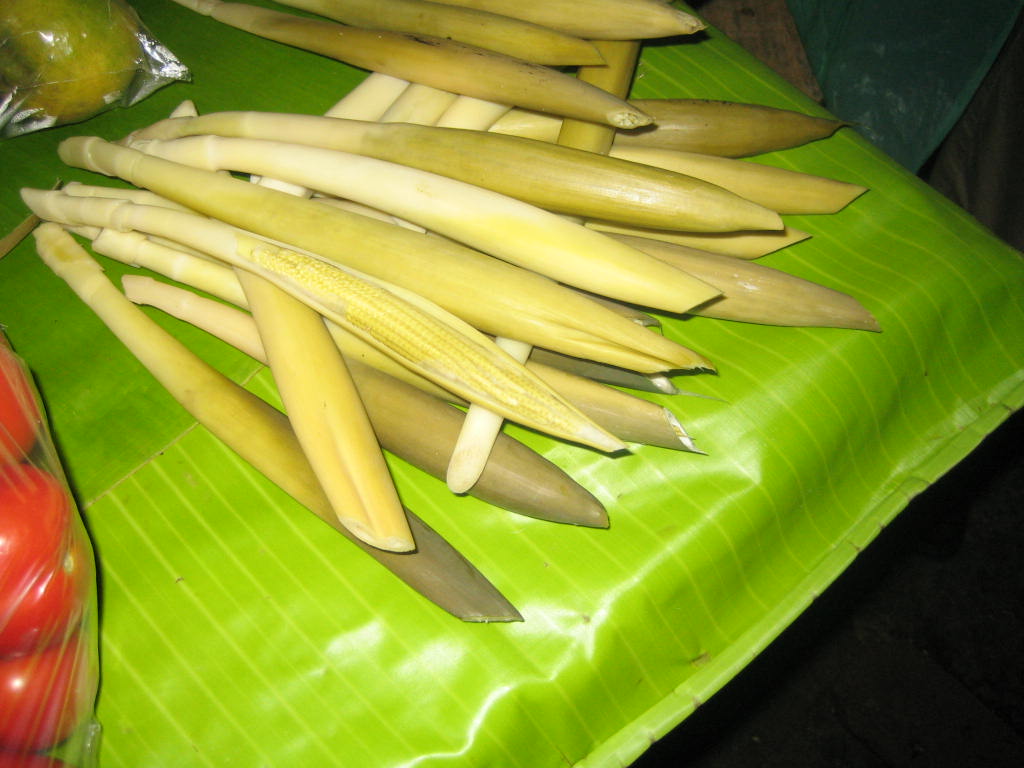
Pacaya. This is the flower of the Palmácea; the palm tree. These are typically [iii] cooked, sliced down the center, stuffed with cheese and cream. We had them for lunch today, “unusual” was the general response.
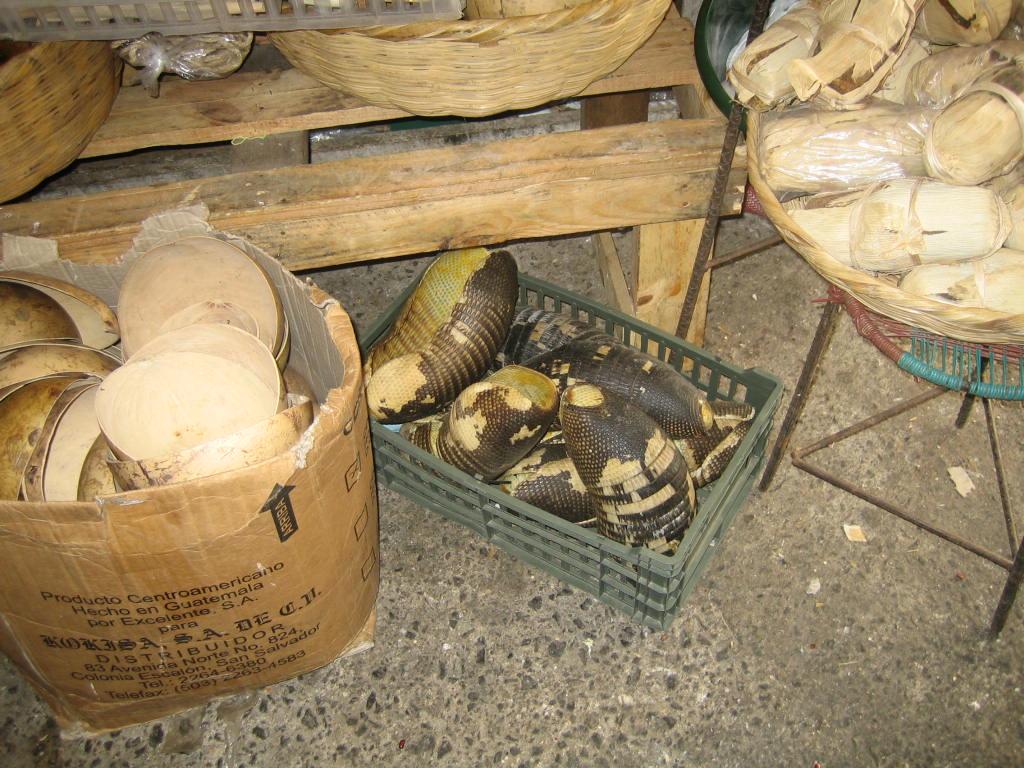
Casco de Morro (on the left). The well-known horchata from Spain is made with chufas. That of El Salvador is made from the seed of morro, rice, sugar, pumpkin seeds, ground cocoa, cinnamon and sesame seeds. The empty morro shells can be used to make everything from candle holders to maracas... the latter are more tuneful. Here is a simple recipe for horchata:
Ingredients (for alot)
1 lb morro seeds
1 oz cinnamon
2 whole nutmeg
2 oz coriander
24 thick peppers
4 lb rice
1 lb morro seeds
1 oz cinnamon
2 whole nutmeg
2 oz coriander
24 thick peppers
4 lb rice
Toast the rice slowly. Add the other ingredients and leave to golden. Grind all the ingredients. This may be stored in sealed bags for as long as you require. When you want to prepare the drink, use 2 dsp to one glass of liquid. For a litre use 3 cups of water, 1 of milk and 8 spoons of powder.
Casco de Armadillo (on the right in the above photo).
Crunchy on the outside; for the previous occupant, tragically empty on the inside.
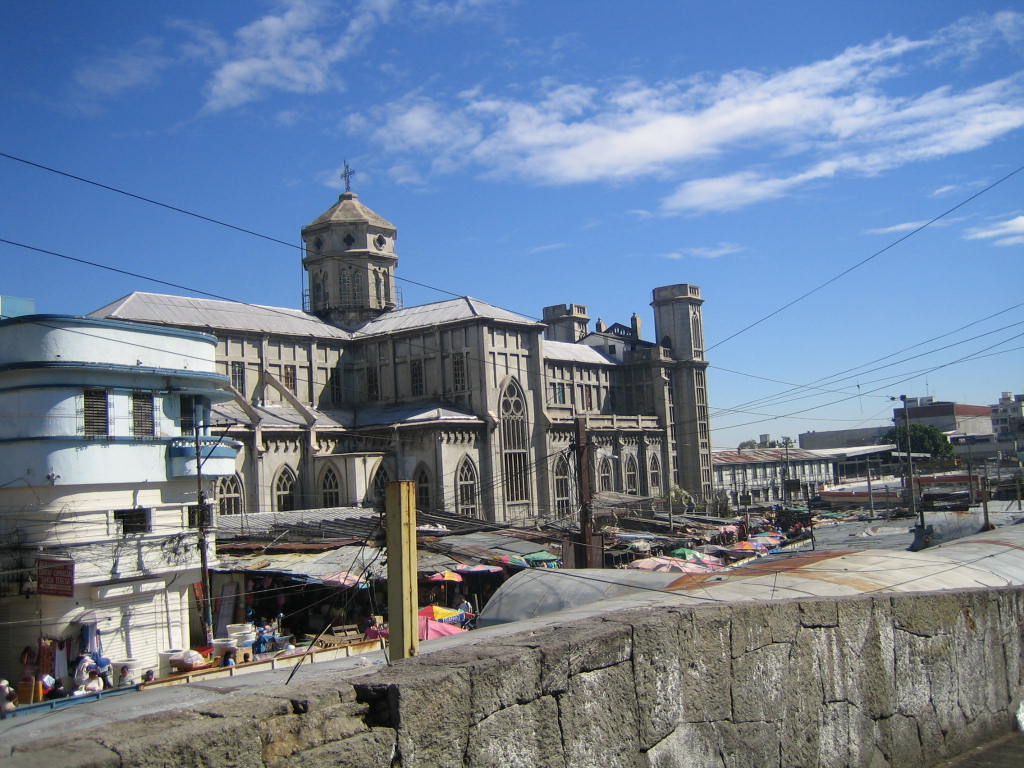
The church of Calvario of San Salvador. This forms part of the view from the upper floor of the market... just behind the pupusa stands.
Sources:
[i] Tim´s blog
[ii] ANEP Asociación Nacional de la Empresa Privada; ENADE 2005
[iii] Rellenos de Pacayas
Friday, January 20, 2006
Green Mango... the taste of the tropics
The minute we arrived in El Salvador Blancs started asking for Green Mango (mango verde). She called this "the taste of the tropics". Although the supermarket was sold out, we did manage to buy it from a street vendor when waiting for the traffic lights to change. It cost $1 for a bag of about 10... seemed like a bargin at the time*.
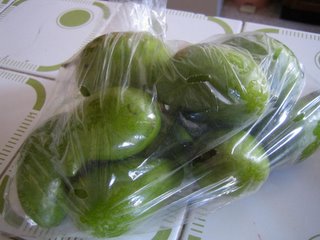
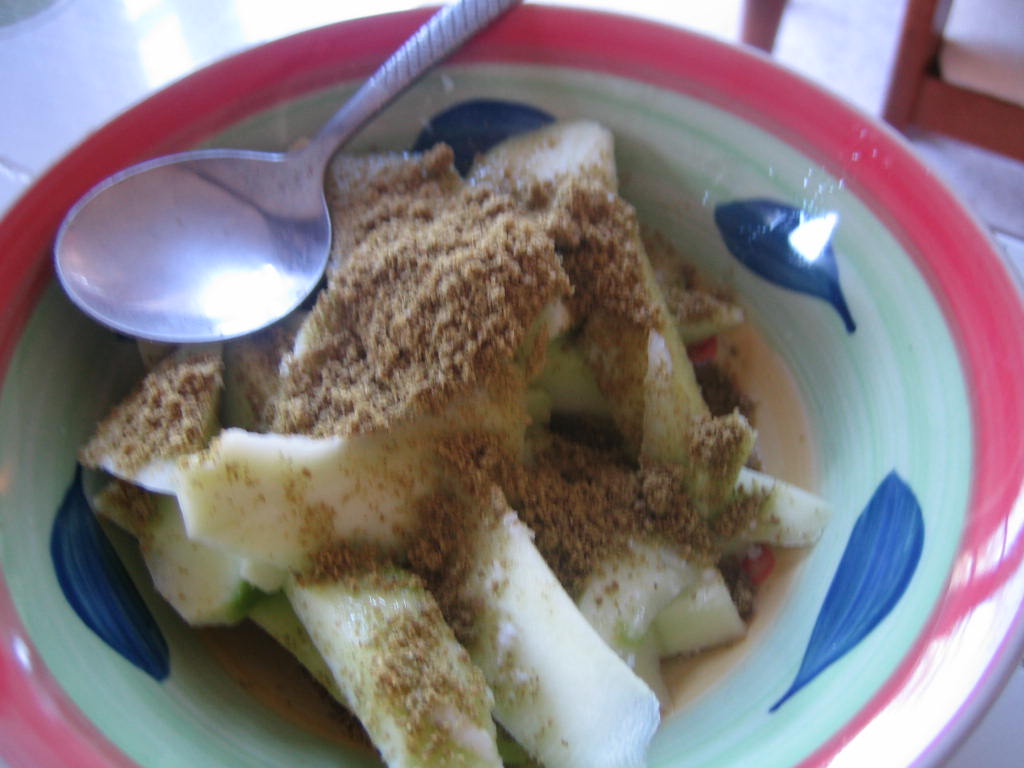
The preparation is very simple, peel and slice the mango. Season it with Limón. In a nice twist of confusion, it turns out that in Central America, limón means LIME, not lemon. It is only here that you will find the limes of sufficient acidity to make really good mango verde, ceviche etc.
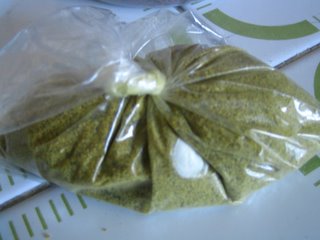
Add a pinch of salt and alguashte. There is little information as to what alguashte really is. Opinion seems to fall between the seed of pepitoria and achiote. I managed to find a site that offers what is considered to be the true answer. The missionaries of El Salvador (you´ve got to trust them!) say that alguashte is slang (caliche) for ground pumpkin seeds.

* today in El Mercado Central of San Salvador we bought 5 manos (hands) of mango verde for $0.35. In 2001, El Salvador exported $0.3M (160,000kg) to the world... that´s a lot of hands.
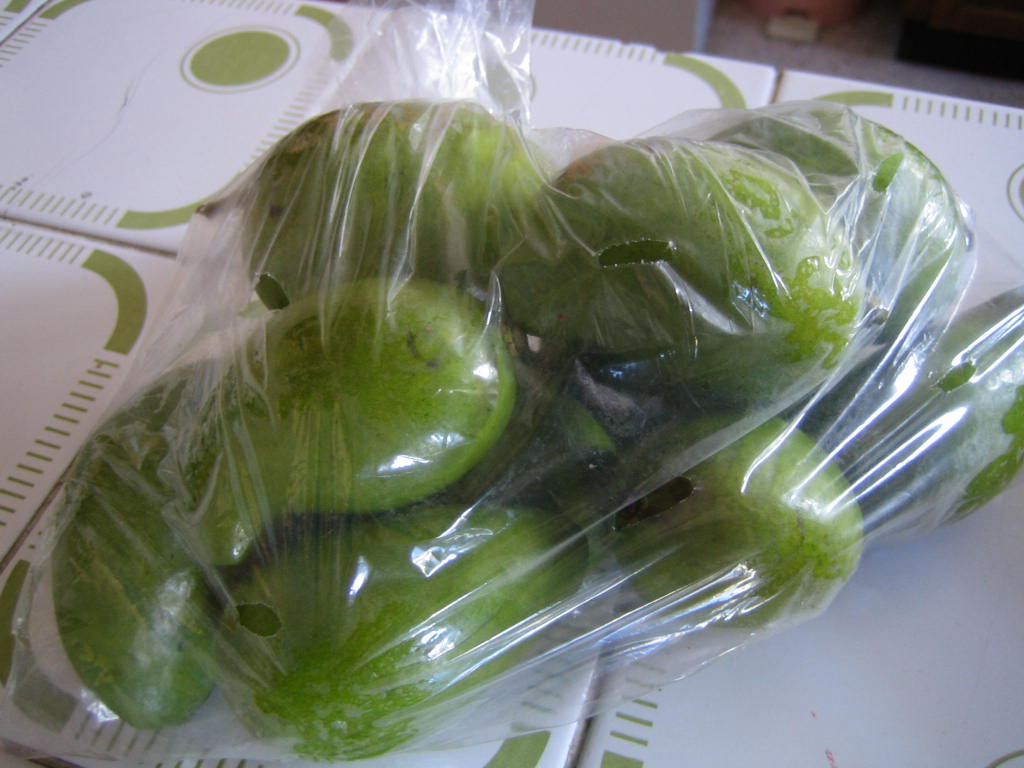
The preparation is very simple, peel and slice the mango. Season it with Limón. In a nice twist of confusion, it turns out that in Central America, limón means LIME, not lemon. It is only here that you will find the limes of sufficient acidity to make really good mango verde, ceviche etc.
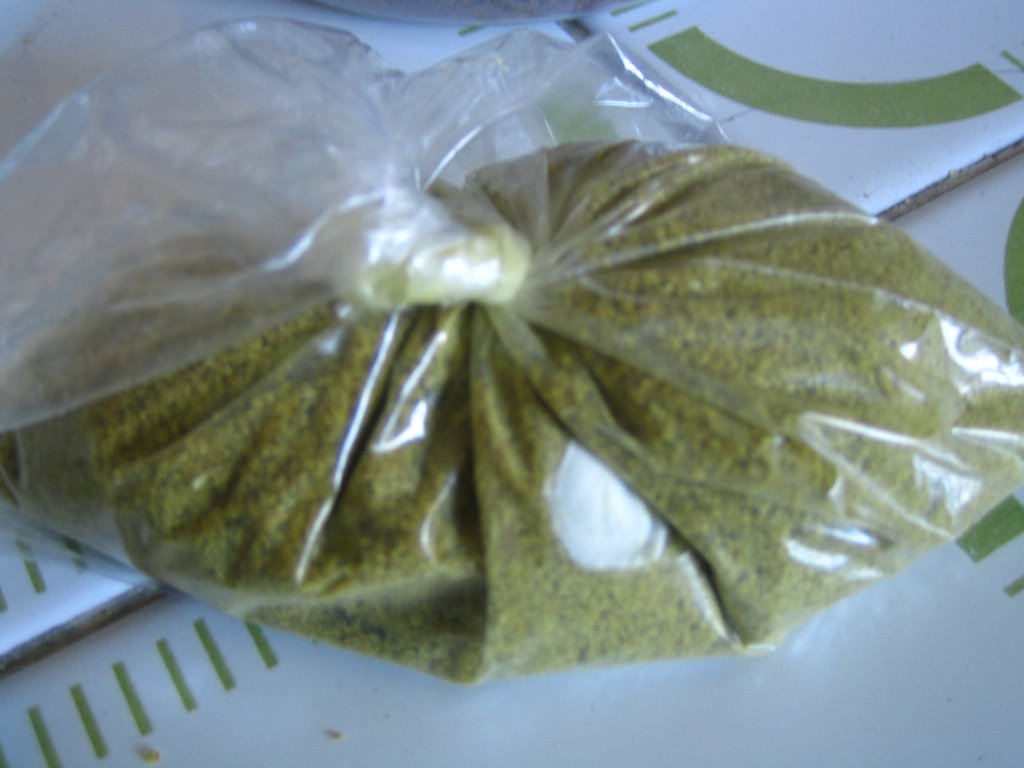
Add a pinch of salt and alguashte. There is little information as to what alguashte really is. Opinion seems to fall between the seed of pepitoria and achiote. I managed to find a site that offers what is considered to be the true answer. The missionaries of El Salvador (you´ve got to trust them!) say that alguashte is slang (caliche) for ground pumpkin seeds.
* today in El Mercado Central of San Salvador we bought 5 manos (hands) of mango verde for $0.35. In 2001, El Salvador exported $0.3M (160,000kg) to the world... that´s a lot of hands.
Wednesday, December 21, 2005
Christmas Sweets from the Convent of Las Comendadoras de Santiago
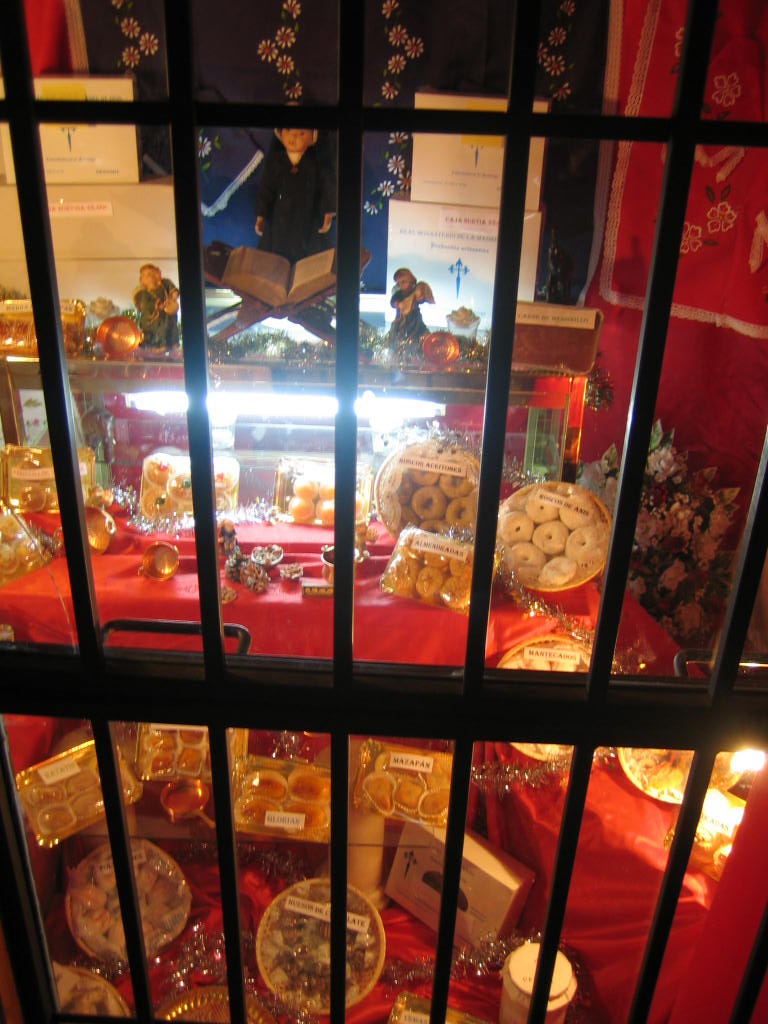
In the twilight, the door slowly rotated until it stopped to the impression of weight and age. Blanca timidly stepped forward and said “hola?”*. Silence greeted her from the other side of the door. She knocked once on the door. Again the wood magnified the sound and seemed to mock her paltry efforts to get attention in such an auspicious place of worship. There was still no response. The light was quickly fading, the lights of Granada were streets away and the sound of the evening shoppers was now a distant memory. In this half-light we found a doorbell located to the left of the doorway. Its shrill note seemed out of place in this place of quiet prayer. Momentarily a frail voice came from the other side of the door “que quieres?” (“what do you want?), this greeting sounded more like an accusation to the shoppers.

The torno at the door of the convent.
A month earlier… in November this year, Amanda Hesser wrote an article on the Thermomix for the New York Times. In this she explained the somewhat “counterintuitive” marketing strategy used by the firm. The product is not sold in shops, it is sold through introduction (somewhat like Tupperware) and the US supplier was less than forthcoming with information. To summarise, she thought the service was bad. Up until yesterday, I would have agreed with her that this was certainly unusual customer service.
In Spain, there is a long tradition of nuns producing sweets. The “dulces conventuales”, whilst not specific to Andalucía, are more important here due to the number of convents and range of sweets that are produced. Two historical facts need to be examined in understanding the development of these sweets.
[i] Firstly, Granada was the last Moorish kingdom to be reconquered by the Catholic Monarchs. In order to celebrate this throughout the Christian world, from the moment of the victory both civil and religious authorities worked to Christianise the city. This was to such an extent that a number of years later, the archbishop of Granada had to put a break on the construction of religious communities. Nevertheless, by the end of the 16th century, there was approximately 1 religious person for every 30 inhabitants, or 622 nuns and 585 monks.

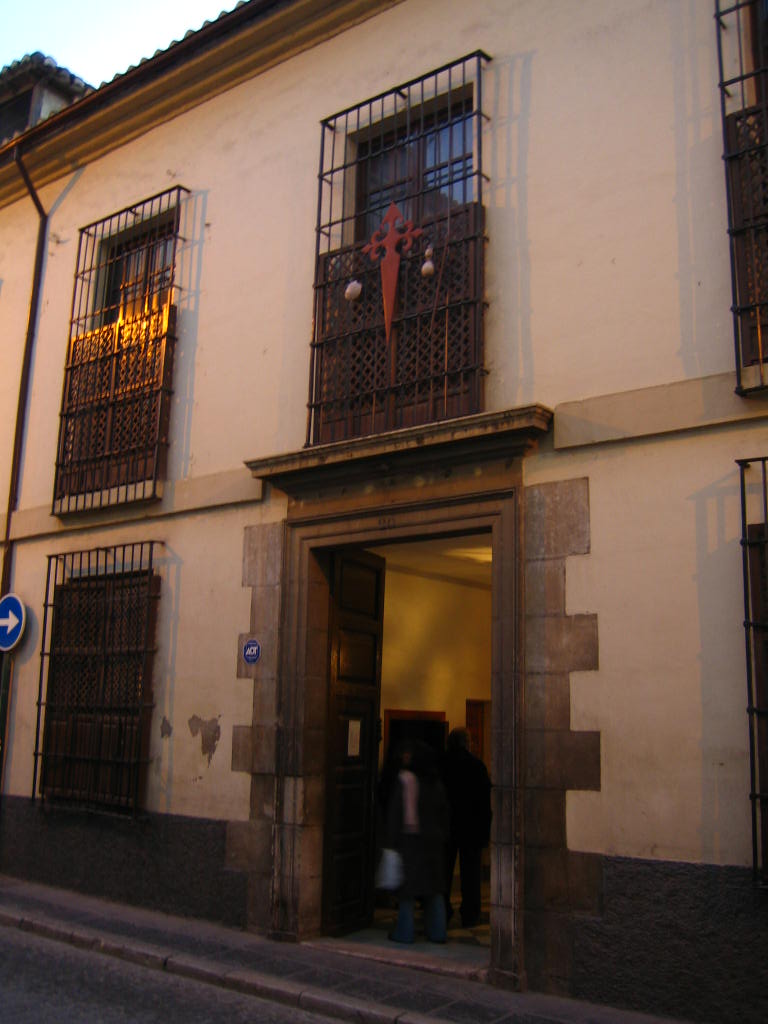
A knight of Santiago... a long way from sweet making.
One of the monasteries that was founded was called “El Monasterio de la Madre Dios” (by the full name; Real Casa de la Madre de Dios, de la Orden de la Caballería de Santiago de España; known as El Convento de las Comandoras de Santiago (The Convent of the Commanders of Santiago)). It was opened by Queen Isabella in 1501. The Order of Santiago itself dates back to 1175, when it was founded by Pedro Fernandez de Fuenteencalada whom, along with 12 other knights of the order, wanted somewhere to protect his wife and children whilst he was fighting the Muslims. Today live 20 nuns in the monastery, 11 of whom come from India.
The second fact that must be considered is the [ii] “desamortización” (disentitlement). This is an economic process that ran in Spain from the end of the 18th century and culminated in the middle of the 20th. It consisted of putting on the market, through means of public auction, the non-productive lands and wealth that were in the hands of the “dead hands” (typically the church and religious orders that had accumulated them through donations and wills). The aim of the desamortización was to grow the national wealth and develop a bourgeoisie middle class of landowners.
[iii] The process of desamortización was used to its fullest by Juan Álvarez Mendizábal, the first minister of Isabel II of Spain. Isabel II proclaimed queen at the age of 3 after the death of her father Fernanado VII. Her accession was disputed by her uncle Carlos María Isidro de Borbón, whom, citing the law (Ley Sálica) that there could be no female heir to the thrown, claimed the thrown for himself. During the war that followed; the First Carlist War (1833-1840), Isabell came to represent the liberal, moderate “nuevo orden”, whilst her uncle, the traditional, religious “antiguo orden”. Mendizábal sold many religious lands in order to finance Isabell’s victory. It is said that the loss of these lands and wealth forced many convents into the production of “dulces convetuales” and sowing in order to earn money.
Most of the recipes are egg based. Convents are often donated a large amount of egg yolks from surrounding wine producers who use the whites during the clarifying process. Additionally, Irene tells me that there is a strong tradition in the south of Spain of gifting eggs to the convents in order that they pray for no rain on wedding days. Blancs and I didn’t do this, but it didn’t rain.
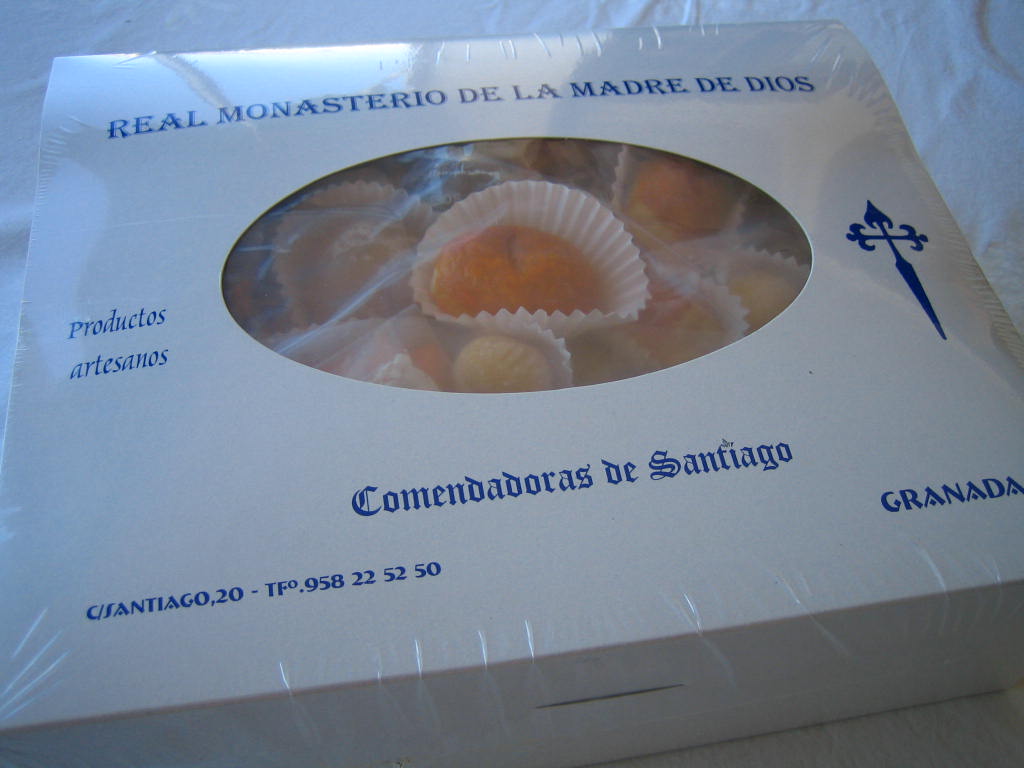
The nuns of the cloister of Santiago are famed for their candied and preserved fruits. There are no written recipes. The sweets are made from memory, based upon recipes that have been maintained over centuries. There combine a cultural and gastronomic legacy and it is said that only the patience and devotion of the nuns can bring out the flavour of the sweets.
Nevertheless, here is a recipe for “Glorias”…
Ingredients:
1 kg ground almonds
1 ¾ kg sugar
Zest of 3 lemons
1 kg Water
1 kg ground almonds
1 ¾ kg sugar
Zest of 3 lemons
1 kg Water
Mix the almond, ¾ kg sugar and lemon. Make a strong syrup by heating the water and sugar. Pour into the almond mixture. Beat until the mixture doesn't stick to the side of the dish. Once cool, make into little balls and cook in the oven until golden.
The nuns of Santiago live by a rule that they can not see people; this explains their unique form of salesmanship. At a more secular level, Ferran Adria swears by the Thermomix and there are approximately 200,000 sold every year in Spain and Italy. Whether it’s the mix of religion, history and economic reform or just something in the water… either way both have immense success in Spain.
¡Feliz Navidad!
Vocab builder:
- escarchada – candied
- confitura – preserved
- rosco – ring-shaped cake
- bollos – bread rolls
- erario – treasury
- subasta – auction
- avituallamiento – provisioning
- lote – plot of land
- puja - bidding
Sources:
[i] Lola Quesada Nieto “Dulces de los Conventos de Clausura de Granada y su Provincia”
[ii] Wikipedia http://es.wikipedia.org/wiki/Desamortizaci%C3%B3n “Desamortización”
[iii] Ramón Tamales y Antonio Rueda “Introducción a la economía española” (26ª edición)
* We have since found out that the traditional greeting is an Ave Maria. This may explain the reception we met.
Saturday, December 17, 2005
Pomegranate S.L.
Sea bass in Pomegranate Sauce (Lubina en Salsa de Granadas)
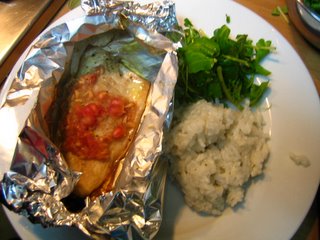
Never has so much responsibility been placed in a fruit. Pomegranate S.L. is the name of our new company and Granada (where we've moved to) is the Spanish name for the fruit. So, if this whole move to Spain goes wrong at least we’ll be able to blame some other fruit.
Given all of the above, I thought it was time to cook something with pomegranate. This recipe comes from Blanca’s friend, Sofia Craxton’s “The Mexican Mama’s Kitchen: Authentic Homestyle Recipes”.
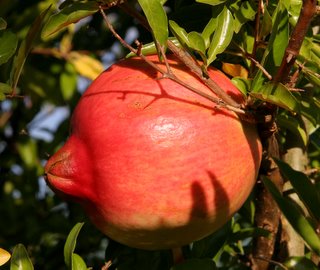
Along with cactus pear, dates, figs and jujube, McGee[i] defines pomegranate as a fruit from arid climates. It was brought to Spain in the ninth century by the Moors. They named their kingdom after the fruit. Missionaries from Spain introduced the fruit to the Caribbean and Latin America in the 1700-1800’s. Today it is principally found in the Mediterranean and western Asia (with the best said to come from Iran). McGee rattles off a few adjectives in association with pomegranates that, honestly, leave me a little confused:
- very sweet – tasting of sugar
- fairly tart – sharp to the taste; acid; sour
- astringent – chemical substance that tends to shrink or constrict body tissues (incidentally a taste that is not detected by birds)
[ii]Jewish tradition teaches it as a symbol of righteousness due to the fact that it is said to have 613 seeds corresponding to the 613 commandments (mitzvot) of the Torah. It is often eating on Rosh Hashanah (Jewish new year for people, animals and, appropriately, legal contracts).
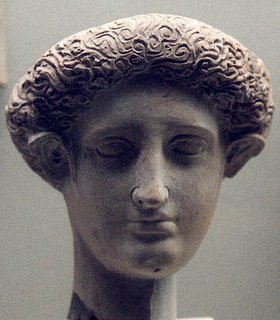
[iii]In a plot that makes the average Spanish Telenovela look tame, Persephone, in Greek mythology the queen of the dead, was said to have been damned to a month every year in hell for every pomegranate seed she ate. She was the daughter of Zeus and Demeter (goddess of the earth) who was abducted by Hades (god of the underworld). In her grief, Demeter became distracted and as a result life on earth came to a standstill. In order to save the world, Zeus ordered Hades to return his daughter. Before being returned, Hades tricked Persephone into eating 6 pomegranate seeds, thereby being condemned to return to the underworld for the same amount of months every year. For this reason, the earth flourishes with vegetation for the 6 months of mother and daughter unity every year.
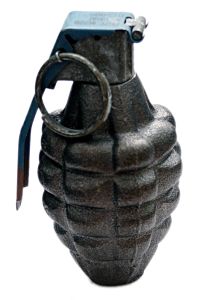
On a rather more prosaic note, the hand grenade gets its name from the pomegranate. The seeds of the pomegranate burst forth with juice in a similar manner to the grenade’s fragments. The juice of the pomegranate stains permanently, whilst the grenade can have similar long-term effects.
One pomegranate myth that is not true relates to the English. Some sources believe that Australians call the English POMS either due to the fact that they have a habit of turning red in the sun or that they came on boats that were also carrying pomegranates. The name in fact comes from Prisoner of Mother England.
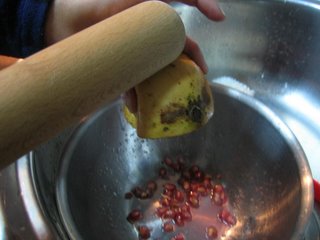
The arils (seed casing) are surrounded by a rind that is rich in tannins and very bitter. So much so that it was once used in tanning leather. Each fruitlet contains one prominent seed which is used “as is” or cooked into a molasses, or fermented into wine. A ripe pomegranate spurts juice as soon as it is pierced, for this reason Blanca showed me the “beat it with a rolling pin” technique. This highly sophisticated method involves cutting the fruit in half and beating each half with a pin in order to dislodge the seeds. Note: a baseball bat could be used for this purpose.
Sofia agrees that pomegranates came to Mexico from Spain. They are in season from September to December. This innovative recipe needs only 20 minutes of preparation to produce a really original taste.
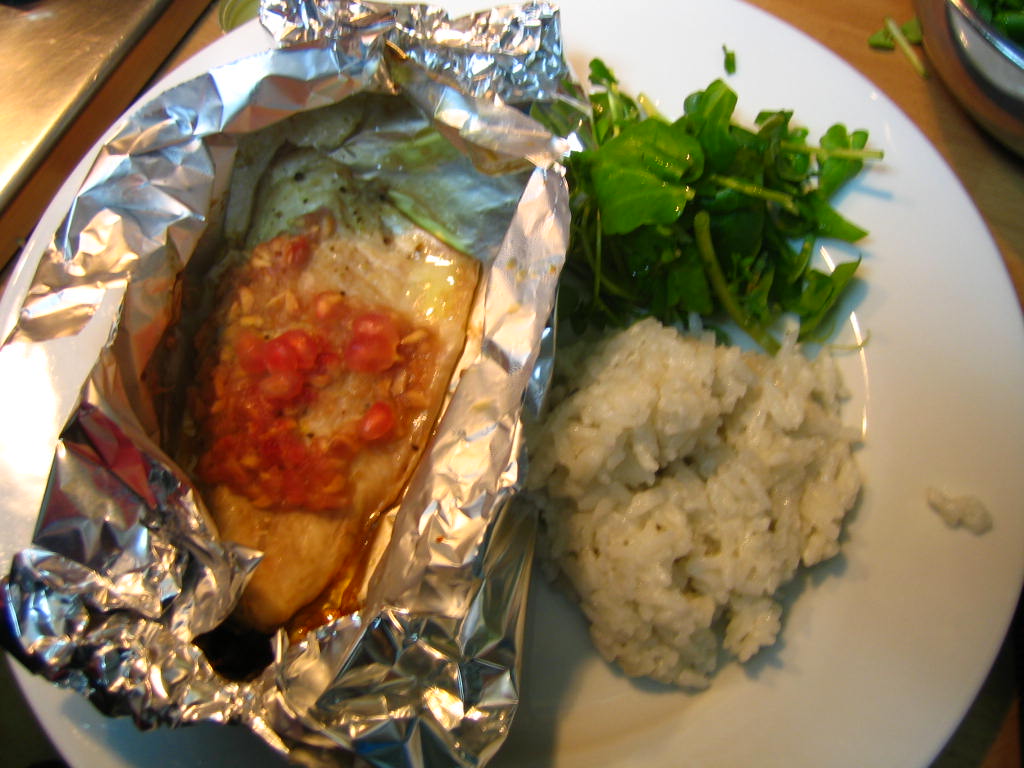
Extract the seeds (reserve some for garnish) and blend with the sugar and lemon until pureed. Place the fillets on their own sheets of aluminium foil. Season with salt and pepper. Pour the sauce over and drizzle with olive oil. Close the parcels, ensuring that the edges are well sealed. Bake in a 180 C oven for about 15 minutes until the fillets are cooked.
Pomegranate seeds lose their colour during cooking, it is important to garnish the cooked fillets prior to serving.
Sofia recommends serving this dish with white rice. In Mexico this is a traditional partner for fish dishes. We cooked the lighter version; melt the butter, add the milk and water and bring to the boil. Add the rice, bring back to the boil, cover and simmer for 10 minutes, leaving to rest before serving.
Sources:
[i] Harold McGee “McGee on Food & Cooking An encyclopedia of kitchen science, history and culture”
[ii] Wikipedia
[iii] Stephanie Alexander “The cook’s companion”
Never has so much responsibility been placed in a fruit. Pomegranate S.L. is the name of our new company and Granada (where we've moved to) is the Spanish name for the fruit. So, if this whole move to Spain goes wrong at least we’ll be able to blame some other fruit.
Given all of the above, I thought it was time to cook something with pomegranate. This recipe comes from Blanca’s friend, Sofia Craxton’s “The Mexican Mama’s Kitchen: Authentic Homestyle Recipes”.
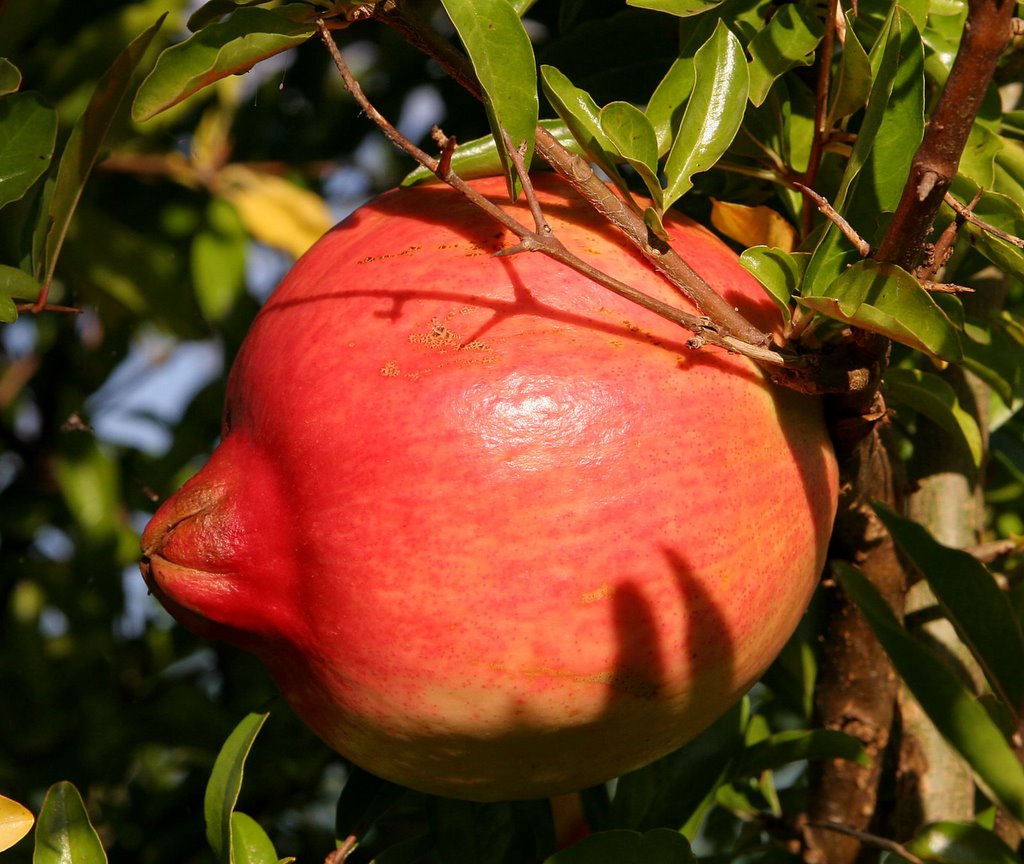
Along with cactus pear, dates, figs and jujube, McGee[i] defines pomegranate as a fruit from arid climates. It was brought to Spain in the ninth century by the Moors. They named their kingdom after the fruit. Missionaries from Spain introduced the fruit to the Caribbean and Latin America in the 1700-1800’s. Today it is principally found in the Mediterranean and western Asia (with the best said to come from Iran). McGee rattles off a few adjectives in association with pomegranates that, honestly, leave me a little confused:
- very sweet – tasting of sugar
- fairly tart – sharp to the taste; acid; sour
- astringent – chemical substance that tends to shrink or constrict body tissues (incidentally a taste that is not detected by birds)
[ii]Jewish tradition teaches it as a symbol of righteousness due to the fact that it is said to have 613 seeds corresponding to the 613 commandments (mitzvot) of the Torah. It is often eating on Rosh Hashanah (Jewish new year for people, animals and, appropriately, legal contracts).
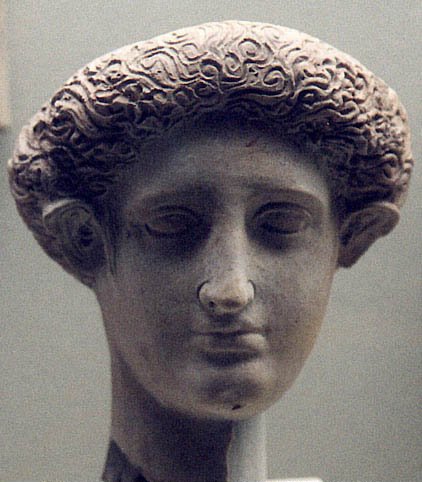
[iii]In a plot that makes the average Spanish Telenovela look tame, Persephone, in Greek mythology the queen of the dead, was said to have been damned to a month every year in hell for every pomegranate seed she ate. She was the daughter of Zeus and Demeter (goddess of the earth) who was abducted by Hades (god of the underworld). In her grief, Demeter became distracted and as a result life on earth came to a standstill. In order to save the world, Zeus ordered Hades to return his daughter. Before being returned, Hades tricked Persephone into eating 6 pomegranate seeds, thereby being condemned to return to the underworld for the same amount of months every year. For this reason, the earth flourishes with vegetation for the 6 months of mother and daughter unity every year.
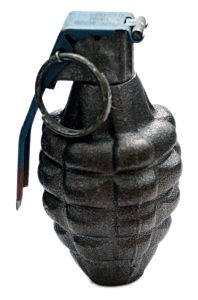
I honestly never thought that I would get a picture of a grenade into a blog...
On a rather more prosaic note, the hand grenade gets its name from the pomegranate. The seeds of the pomegranate burst forth with juice in a similar manner to the grenade’s fragments. The juice of the pomegranate stains permanently, whilst the grenade can have similar long-term effects.
One pomegranate myth that is not true relates to the English. Some sources believe that Australians call the English POMS either due to the fact that they have a habit of turning red in the sun or that they came on boats that were also carrying pomegranates. The name in fact comes from Prisoner of Mother England.
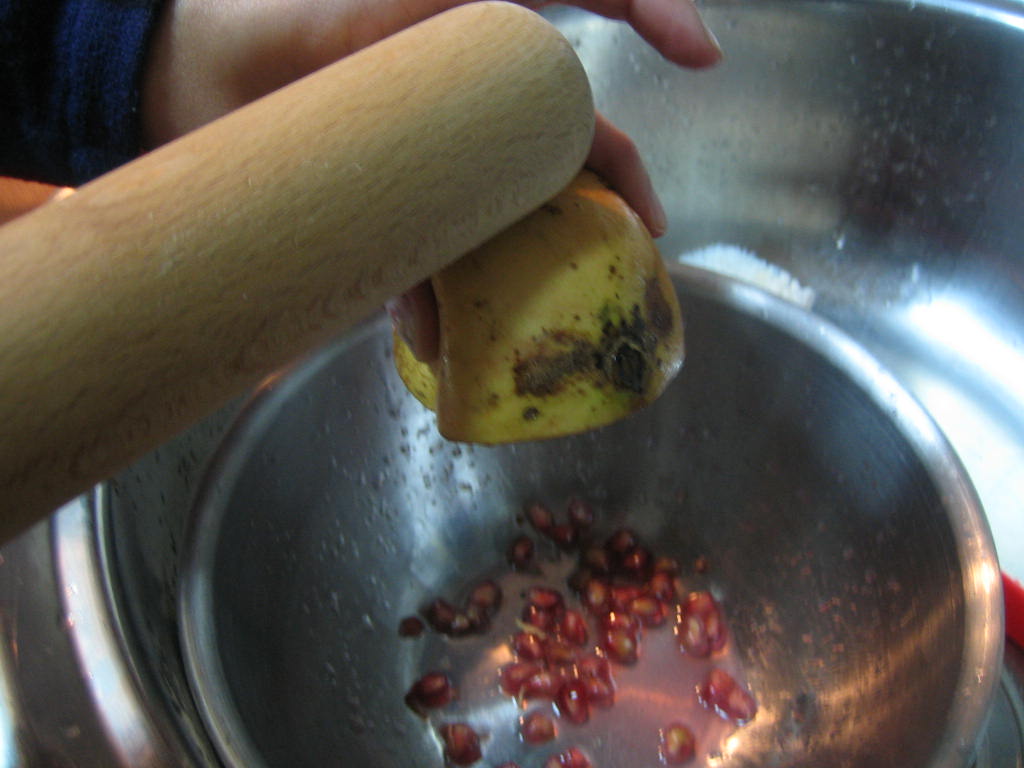
The arils (seed casing) are surrounded by a rind that is rich in tannins and very bitter. So much so that it was once used in tanning leather. Each fruitlet contains one prominent seed which is used “as is” or cooked into a molasses, or fermented into wine. A ripe pomegranate spurts juice as soon as it is pierced, for this reason Blanca showed me the “beat it with a rolling pin” technique. This highly sophisticated method involves cutting the fruit in half and beating each half with a pin in order to dislodge the seeds. Note: a baseball bat could be used for this purpose.
Ingredients (for 4):
2 seabass
1 ½ large pomegranates
1 tsp sugar
Juice of ½ lemon
1 cup basmati rice
½ cup coconut milk
1 cup water
Butter
Salt and pepper
Olive oil
2 seabass
1 ½ large pomegranates
1 tsp sugar
Juice of ½ lemon
1 cup basmati rice
½ cup coconut milk
1 cup water
Butter
Salt and pepper
Olive oil
Sofia agrees that pomegranates came to Mexico from Spain. They are in season from September to December. This innovative recipe needs only 20 minutes of preparation to produce a really original taste.
Extract the seeds (reserve some for garnish) and blend with the sugar and lemon until pureed. Place the fillets on their own sheets of aluminium foil. Season with salt and pepper. Pour the sauce over and drizzle with olive oil. Close the parcels, ensuring that the edges are well sealed. Bake in a 180 C oven for about 15 minutes until the fillets are cooked.
Pomegranate seeds lose their colour during cooking, it is important to garnish the cooked fillets prior to serving.
Sofia recommends serving this dish with white rice. In Mexico this is a traditional partner for fish dishes. We cooked the lighter version; melt the butter, add the milk and water and bring to the boil. Add the rice, bring back to the boil, cover and simmer for 10 minutes, leaving to rest before serving.
Sources:
[i] Harold McGee “McGee on Food & Cooking An encyclopedia of kitchen science, history and culture”
[ii] Wikipedia
[iii] Stephanie Alexander “The cook’s companion”
Sunday, December 11, 2005
Homemade Pasta (not money)
Homemade Pasta
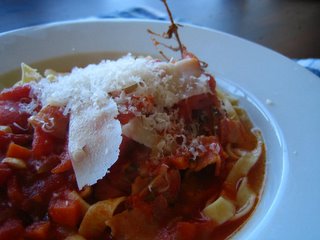
Within a couple of weeks of moving to Spain, I realised that the civil war is used frequently as a gauge against which time is judged. Comments such as “these windows haven’t been cleaned since the war”, “the electrical wiring in this apartment hasn’t been examined since the war” or “the company that sold you your kitchen went out of business during war” are (depressingly) commonplace. They also go some way to explain why we have been here for 3 months and only now have gotten our apartment working.
The last three days have been spent sorting through boxes of Blanca’s family belongings in storage. In colloquial terms, some of these boxes seemed to have been untouched since the war. Amongst others, the following nuggets of history featured:
- A copy of “El Practicon”, a 1917 cookbook that Ferran Adria cites as being where he learnt to cook.
- Hugh Thomas’s 1961 book on “The Spanish Civil War”. This has now been recommended to me as “optional” reading. Note: yes, I realise that this was written after the war.
- A steel Italian pasta maker still in its original box.
The pasta maker was put into immediate use on our return to Granada this afternoon. This was my first time cooking pasta from scratch. In Spanish, “la pasta” means money. Despite the fact that we have now been in Spain in “business planning mode” for a few months, we are yet to discover the art of making money at home. We’re working on it, but I’m not sure I’ll blog it.
The following instructions come from Marcella Hazan’s “The Essentials of Classic Italian Cooking”. Knowing how I love instructions that aren’t exactly correct, Blanca chose to modify these in a few key places along the way. I suffered so that you can have the 100% accurate directions to making pasta in the home...
The first modification that we would suggest is that the above proportion does not suit conventional soft flour. The ratio could be closer to 4:4 of flour to eggs i.e. 400 g to 4 eggs for approximately 4 people.
Combining the eggs and the flour
Another modification would be to not add all the egg at once, it is best to break the eggs into a glass as this will allow you control the amount that you add to the pasta mixture. Beat them as you would an omelette. Next place the flour in a mound on the worksurface. Hollow a hole in the centre into which you put half of the mixture. Work the flour and eggs together with your fingers and the palms of your hand. You should aim for a smooth mixture that isn’t moist.
Pastry still strikes fear into my heart and it can be quite intimidating at first. Like dogs, it smells fear so don’t be afraid of it. Marcella gives a good tip for when the pasta is ready… wash and dry your hands; press your thumb into the centre of the dough. It should come out clean with no sticky mass on it.
Blanca says that when her class was learning pasta making in Le Cordon Bleu, often they would over flour the dough. It is easier to mix wet into a dough than dry and for this reason the students would wait until the chef’s back was turned, bin their dough and start again. I have this image of students carrying over dry dough into the pubs at night or around in their bags for weeks afterwards.
Kneading
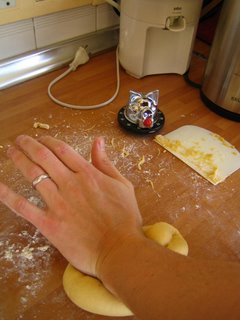
One of the great techniques of dough making, kneading, focuses on elongating and toughening the gluten strands that have developed within the pasta (combination of the egg and flour protein).
Place the heel of your hand on the top of the dough and push away from you. With your fingertips bring the back of the dough up and over the front. Give the dough a quarter turn. Repeat the process with your other hand. Always ensure that you are rotating in the same direction in order to develop longer gluten strands. Continue the kneading process for about 8 minutes until the dough is very smooth.
Thinning
We used the pasta machine that we found when digging through the family trove. This is made by Marcato Company of, eh, Italy, who obviously have bought out or scared away all of their competition; it seems to be the only design of pasta maker that you see in books or on the web. This company started “at a craft level” in 1938. Their standard model is the futuristically named “Atlas 150”, I’m not sure about the 149 that went before, but it works very well. I just noticed that the guarantee for our pasta maker expired after 3 years… I guess that covered its first 1/3 of living in a box (I’m a living in a cardboard box). With flavours of its fine Italian heritage, the Atlas 150 has a clamp that locks it to the kitchen table, this is mandatory if your pasta is planning on escaping during the torture.
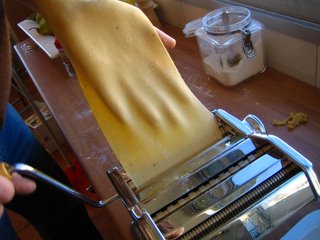
The instructions are pretty straightforward:
1. Work with a handful of pasta at a time.
2. Set the rollers to their widest width. Flour the dough to ensure that it doesn’t stick. Feed it once through the rollers.
3. OPTIONAL: watch as the handle falls off, pick it up and put it back in the machine.
4. Fold the pasta across its width and repeat the process two or three times.
5. Reduce the separation of the rollers and repeat the process twice for every setting.
6. OPTIONAL: watch as the handle falls off every time you adjust the setting. Bend down and pick it up each time.

7. Leave the pasta to dry on a towel for about 10 minutes, turning occasionally.
Cutting
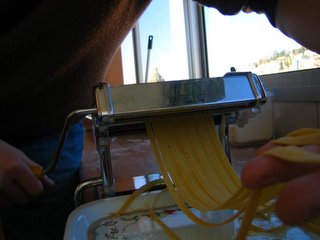
This is only going to make sense if you have a cutter on your pasta machine (comes standard with the Atlas 150). We used the narrow cutters for tagliolini (broad for fettuccine). Feed the strips through the pasta cutter. As the ribbons emerge, separate them and spread on a tea towel.
There are over 300 shapes of pasta, for anyone with an interest in learning them all, I found the highly comprehensive (I nearly wrote very interesting) “World Dictionary of Pasta Shapes and Names”.
Cooking
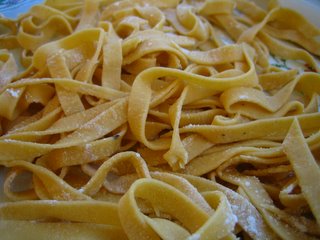
Notably, above there is no salt included in the pasta mixture. The only salt that you use should be added during the cooking. Boil plenty of water, add salt and return to the full boil. Put all of the pasta in at one go, return to the boil (use the lid to hasten the return) and cook uncovered.
Cook until the pasta is al dente, with bought pasta this is usually signified by the fact that no white remains when you bite into the pasta. For homemade pasta this will not work. The pasta will never be as firm or chewy as bought. When the pasta floats and still offers some resistance, it is ready (2-3 minutes).
Related and next on the cards for pasta making, it’s going to be Japanese Noodle Making…
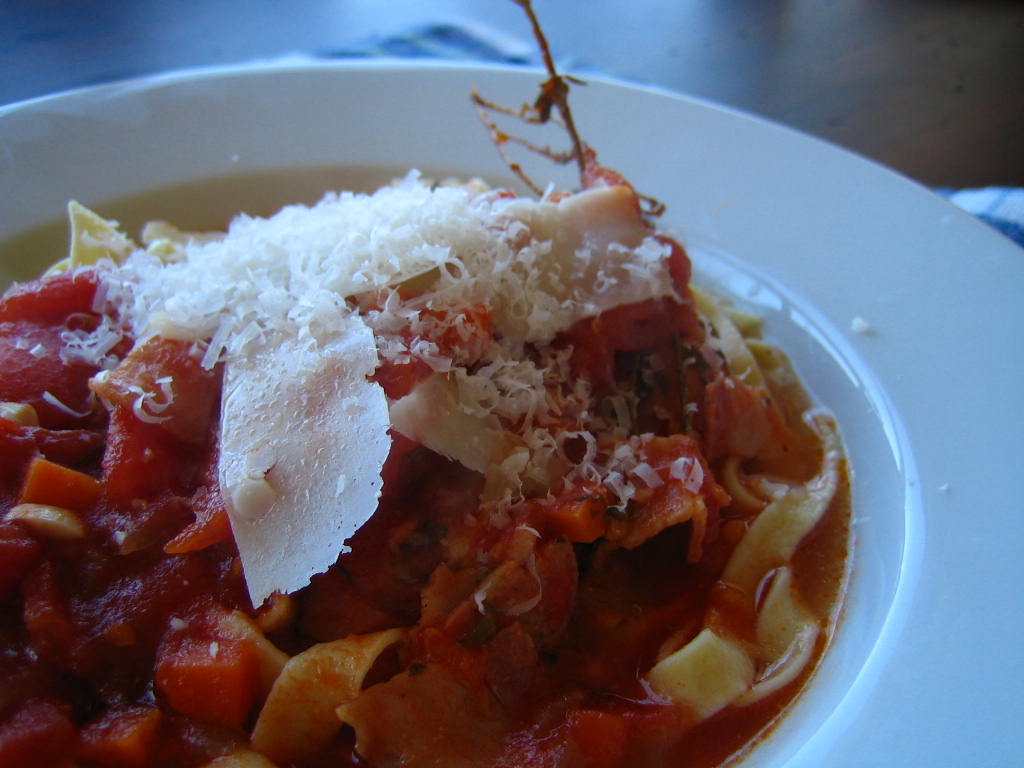
Within a couple of weeks of moving to Spain, I realised that the civil war is used frequently as a gauge against which time is judged. Comments such as “these windows haven’t been cleaned since the war”, “the electrical wiring in this apartment hasn’t been examined since the war” or “the company that sold you your kitchen went out of business during war” are (depressingly) commonplace. They also go some way to explain why we have been here for 3 months and only now have gotten our apartment working.
The last three days have been spent sorting through boxes of Blanca’s family belongings in storage. In colloquial terms, some of these boxes seemed to have been untouched since the war. Amongst others, the following nuggets of history featured:
- A copy of “El Practicon”, a 1917 cookbook that Ferran Adria cites as being where he learnt to cook.
- Hugh Thomas’s 1961 book on “The Spanish Civil War”. This has now been recommended to me as “optional” reading. Note: yes, I realise that this was written after the war.
- A steel Italian pasta maker still in its original box.
The pasta maker was put into immediate use on our return to Granada this afternoon. This was my first time cooking pasta from scratch. In Spanish, “la pasta” means money. Despite the fact that we have now been in Spain in “business planning mode” for a few months, we are yet to discover the art of making money at home. We’re working on it, but I’m not sure I’ll blog it.
The following instructions come from Marcella Hazan’s “The Essentials of Classic Italian Cooking”. Knowing how I love instructions that aren’t exactly correct, Blanca chose to modify these in a few key places along the way. I suffered so that you can have the 100% accurate directions to making pasta in the home...
Ingredients (for 2)
115 g flour
2 eggs (medium)
1 Italian pasta maker (not edible)
115 g flour
2 eggs (medium)
1 Italian pasta maker (not edible)
The first modification that we would suggest is that the above proportion does not suit conventional soft flour. The ratio could be closer to 4:4 of flour to eggs i.e. 400 g to 4 eggs for approximately 4 people.
Combining the eggs and the flour
Another modification would be to not add all the egg at once, it is best to break the eggs into a glass as this will allow you control the amount that you add to the pasta mixture. Beat them as you would an omelette. Next place the flour in a mound on the worksurface. Hollow a hole in the centre into which you put half of the mixture. Work the flour and eggs together with your fingers and the palms of your hand. You should aim for a smooth mixture that isn’t moist.
Pastry still strikes fear into my heart and it can be quite intimidating at first. Like dogs, it smells fear so don’t be afraid of it. Marcella gives a good tip for when the pasta is ready… wash and dry your hands; press your thumb into the centre of the dough. It should come out clean with no sticky mass on it.
Blanca says that when her class was learning pasta making in Le Cordon Bleu, often they would over flour the dough. It is easier to mix wet into a dough than dry and for this reason the students would wait until the chef’s back was turned, bin their dough and start again. I have this image of students carrying over dry dough into the pubs at night or around in their bags for weeks afterwards.
Kneading
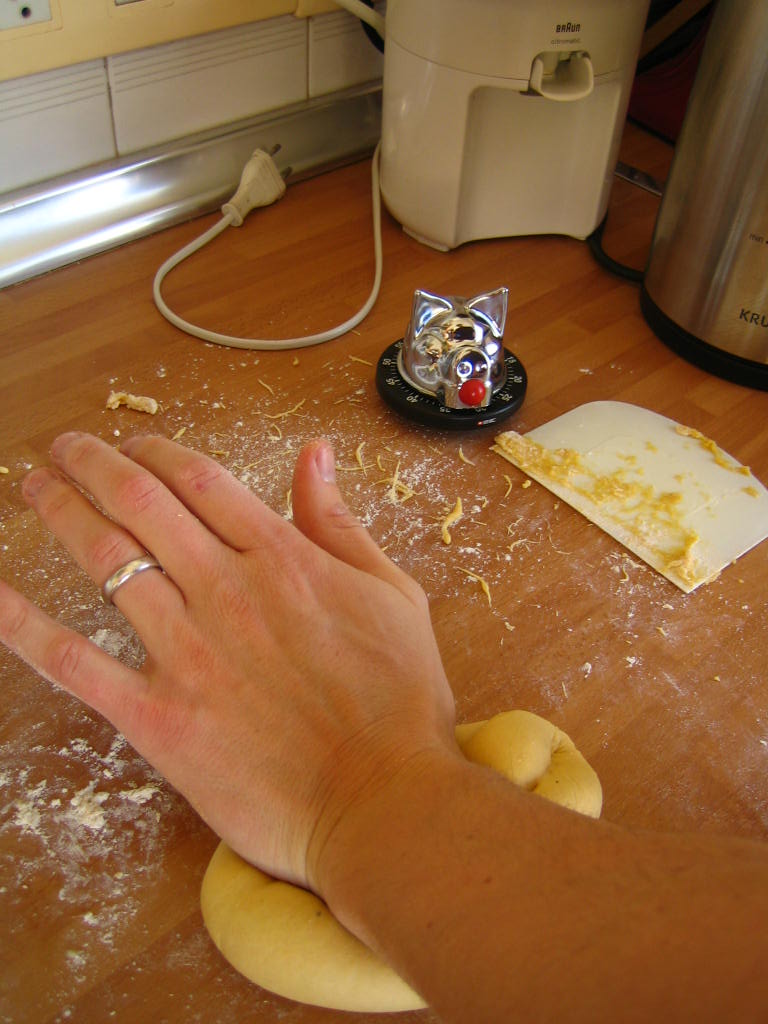
One of the great techniques of dough making, kneading, focuses on elongating and toughening the gluten strands that have developed within the pasta (combination of the egg and flour protein).
Place the heel of your hand on the top of the dough and push away from you. With your fingertips bring the back of the dough up and over the front. Give the dough a quarter turn. Repeat the process with your other hand. Always ensure that you are rotating in the same direction in order to develop longer gluten strands. Continue the kneading process for about 8 minutes until the dough is very smooth.
Thinning
We used the pasta machine that we found when digging through the family trove. This is made by Marcato Company of, eh, Italy, who obviously have bought out or scared away all of their competition; it seems to be the only design of pasta maker that you see in books or on the web. This company started “at a craft level” in 1938. Their standard model is the futuristically named “Atlas 150”, I’m not sure about the 149 that went before, but it works very well. I just noticed that the guarantee for our pasta maker expired after 3 years… I guess that covered its first 1/3 of living in a box (I’m a living in a cardboard box). With flavours of its fine Italian heritage, the Atlas 150 has a clamp that locks it to the kitchen table, this is mandatory if your pasta is planning on escaping during the torture.

The instructions are pretty straightforward:
1. Work with a handful of pasta at a time.
2. Set the rollers to their widest width. Flour the dough to ensure that it doesn’t stick. Feed it once through the rollers.
3. OPTIONAL: watch as the handle falls off, pick it up and put it back in the machine.
4. Fold the pasta across its width and repeat the process two or three times.
5. Reduce the separation of the rollers and repeat the process twice for every setting.
6. OPTIONAL: watch as the handle falls off every time you adjust the setting. Bend down and pick it up each time.
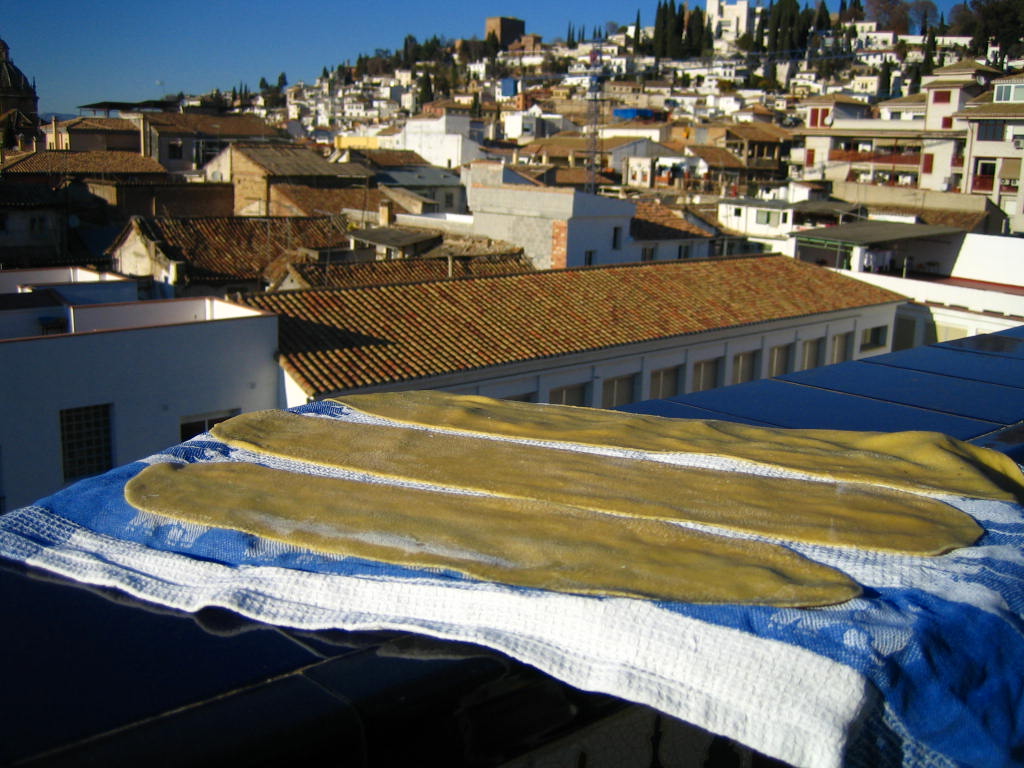
Whilst drying, cultured pasta will often admire the view and historical places of interest of the old Jewish quarter of Granada...
7. Leave the pasta to dry on a towel for about 10 minutes, turning occasionally.
Cutting
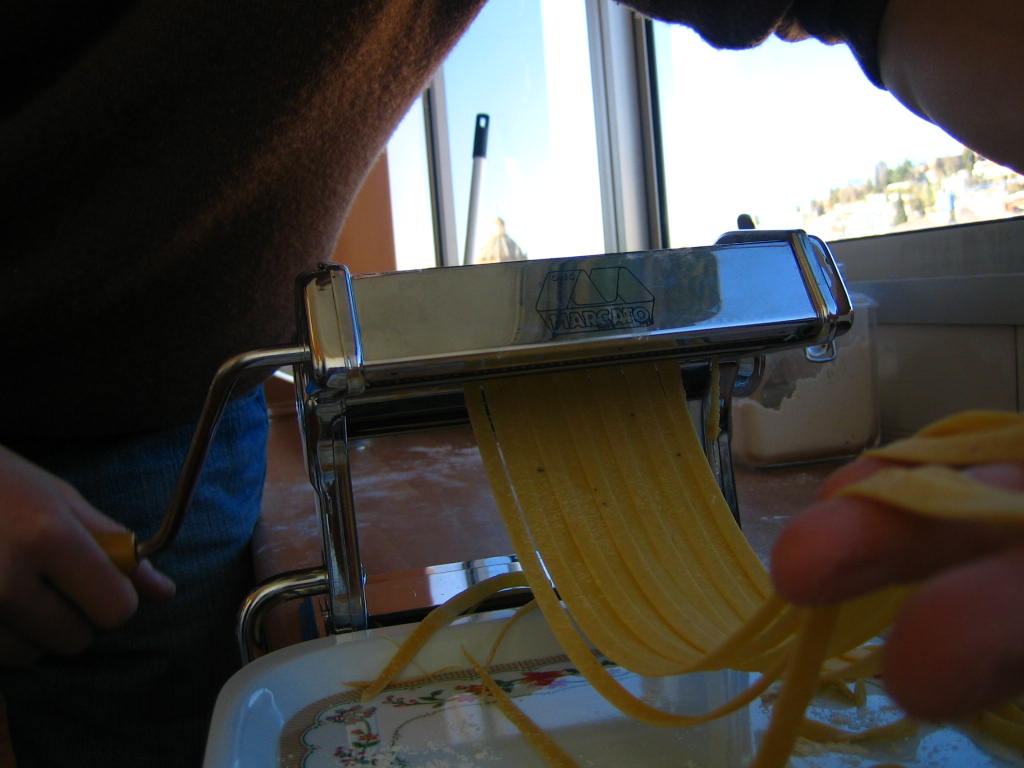
This is only going to make sense if you have a cutter on your pasta machine (comes standard with the Atlas 150). We used the narrow cutters for tagliolini (broad for fettuccine). Feed the strips through the pasta cutter. As the ribbons emerge, separate them and spread on a tea towel.
There are over 300 shapes of pasta, for anyone with an interest in learning them all, I found the highly comprehensive (I nearly wrote very interesting) “World Dictionary of Pasta Shapes and Names”.

Cooking
Notably, above there is no salt included in the pasta mixture. The only salt that you use should be added during the cooking. Boil plenty of water, add salt and return to the full boil. Put all of the pasta in at one go, return to the boil (use the lid to hasten the return) and cook uncovered.
Cook until the pasta is al dente, with bought pasta this is usually signified by the fact that no white remains when you bite into the pasta. For homemade pasta this will not work. The pasta will never be as firm or chewy as bought. When the pasta floats and still offers some resistance, it is ready (2-3 minutes).
Related and next on the cards for pasta making, it’s going to be Japanese Noodle Making…
Tuesday, December 06, 2005
Nearly not a casserole blog
Pollo en Pepitoria (Chicken in egg, almond and sherry sauce)
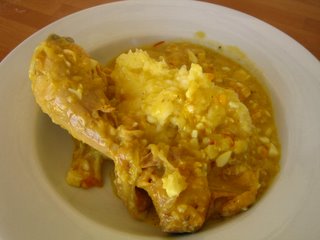
“This dish combines all of the ingredients most often associated with Spanish cooking – garlic, saffron, sherry, and almonds – into an unusually savoury sauce” Penelope Casas[i]
Last night we went for a very typical Spanish casserole dish. It is a dish that was frequently served at the Spanish court in the 17th century…
That is at least how this blog could have started. As it turns out, I misunderstood where we were going. Instead of going for a CAzuela, we went to see a ZARzuela. This is basically a Spanish musical; alternating scenes of speaking and singing. It rose to fame in the Spanish courts during the 17th century. We went to see “Agua, azucarillos y aguardiente”, written in 1897 by the composer Federico Chueca.
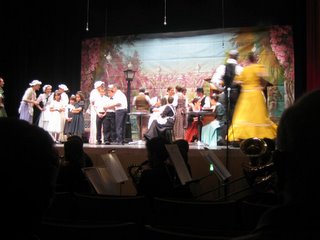
Anyone who has been to the West End of London will know that musicals are not the hardest to grasp. From what I can understand, zarzuelas consist of Spaniards going to the theatre to see how Spaniards live. We arrived a little late when the cast was dancing and singing, the next scene focused on relationship problems, the next on financial problems, the next on tapas, the next on landlord problems, work problems… As with many things in Spain, the Virgin Mary had a somewhat unorthodox role during the production, she seemed to be there to guard the raffle prizes that were located to the left of the stage during the show. As it turns out my parents-in-law won the prize (ham and wine), so thank you Mary.
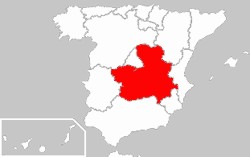
I don’t want this to be a “nearly not a casserole blog” so I’m going to loosely define a recent recipe as casserole … pollo en pepitoria. This is a recipe typical to Castillia-La Mancha. One of the 17 autonomous communities of Spain, Castillia-La Mancha is the central community of Spain (excluding Madrid). It is the flat land wherein much of Don Quijote (de la Mancha) is based. It is the 3rd largest community, with 79,463 km square and 9th in terms of population, with 1.8 m people.
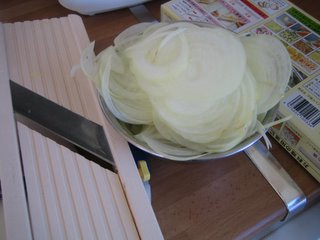
For the mise en place, finely slice the onions. I used a mandolin that we got in Japan. Crush the garlic with the fine end of a butcher knife.
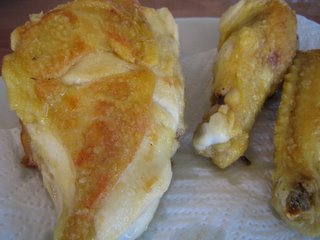
Cut the chicken into portion sized pieces, season and roll in flour. In a large casserole heat the oil and sauté the chicken over a high heat until well brown. In order to maintain the heat of the pan, add only a few pieces at a time.
Sieve the oil so that a good tablespoon of oil remains. Reduce the heat and sauté the onion and garlic until translucent. It is best to leave the lid on the pot at this point as it will build up the heat and effectively steam the onion rather than flame cook it. Stir in the stock, sherry, saffron and laurel leaf. In order to get the strongest flavour from the saffron, it is worthwhile to toast it in tinfoil over a flame.
THE LAID BACK ENDING: There is an option in the recipe now. We followed the low-maintenance route which basically left the casserole to simmer for 1 ½ to 2 hours, until the chicken is bland. 15 minutes before the end we added the finely ground almonds and the chopped eggs.
THE FOOD ACADEMIC ENDING: Penelope Casas recommends a slightly more comprehensive method; simmer for 10 minutes. Remove the chicken and bay leaf to a warm dish. Blend the casserole with the ground almonds. Return all the ingredients to the casserole. Cover and cook at 350 F for 20 minutes adding broth as required. Sprinkle the egg only 5 minutes from the end.
A bit about Saffron[ii]:
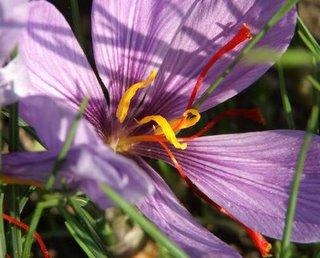
Imparting both an intense yellow colour and unusual flavour to food, saffron is a vital part of many Spanish dishes. It was brought to Spain by the Arabs. The name is actually derived from the Arabic for “thread”. Iran and Spain are the major exporters of the spice today.
It is the world’s most expensive spice. There are 3 stigmata per saffron flower. It takes about 80,000 flowers to produce 5 lb of stigma, which in turn dry down to about 1 lb (450 g) of saffron… this relates to a 1,000 metre square field or, because the stigma are so delicate, 12 days for an experienced picker. All of the stigma must be harvested on the same day that the flower begins to open (typically a busy day in late autumn).
Crocin is the name for the intense colorant in saffron. It is a carotenoid pigment made up of a sandwich of one pigment between two sugar molecules. The sugar is the reason that the usually oil-soluble pigment is actually soluble in water and hence particularly useful in cooking. Alcohol is commonly used in conjunction in order to dissolve additional fat-soluble carotenoids.
The flavour is described varyingly as “notable bitterness”, “penetrating”, “hay-like aroma”, “unique flowery”, “medicinal” or… “subtle”.
Vocab builder:
Trocear – divide
Salpimentar – babelfish defines this as “to salpimentar”; “to season” is somewhat closer
Estofar – sauté
Endnotes and acknowledgements:
[i] Penelope Casas “Food and wine of Spain”
[ii] Harold McGee “McGee on Food & Cooking: an encyclopaedia of kitchen science, history and culture”
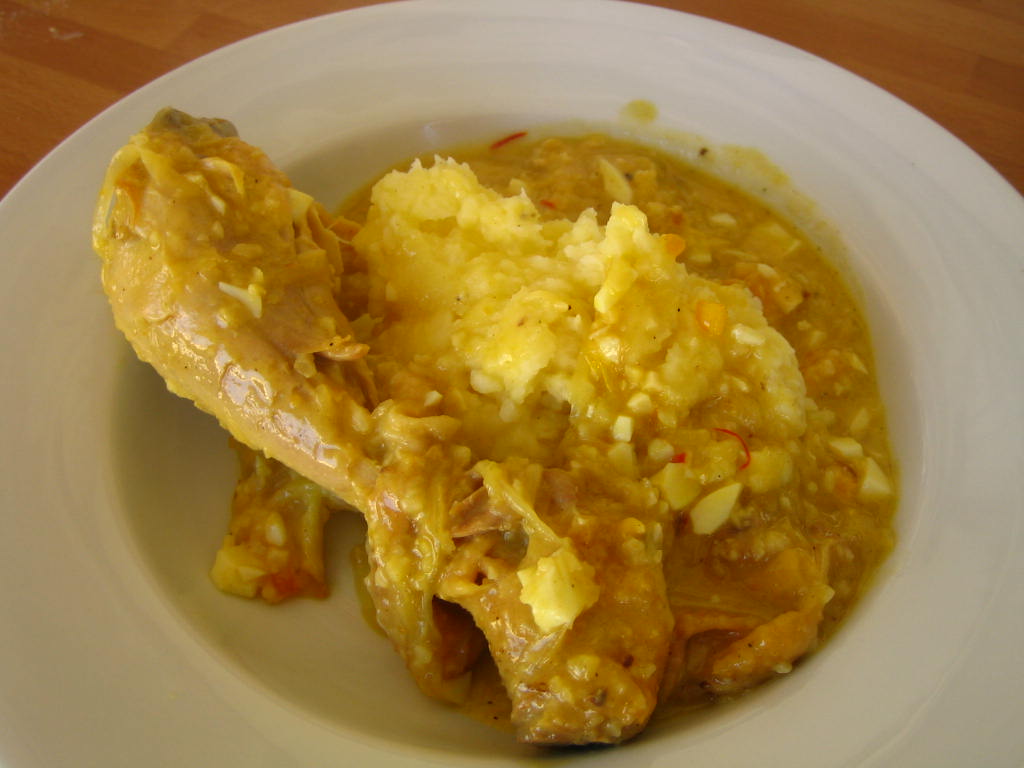
“This dish combines all of the ingredients most often associated with Spanish cooking – garlic, saffron, sherry, and almonds – into an unusually savoury sauce” Penelope Casas[i]
Last night we went for a very typical Spanish casserole dish. It is a dish that was frequently served at the Spanish court in the 17th century…
That is at least how this blog could have started. As it turns out, I misunderstood where we were going. Instead of going for a CAzuela, we went to see a ZARzuela. This is basically a Spanish musical; alternating scenes of speaking and singing. It rose to fame in the Spanish courts during the 17th century. We went to see “Agua, azucarillos y aguardiente”, written in 1897 by the composer Federico Chueca.
Anyone who has been to the West End of London will know that musicals are not the hardest to grasp. From what I can understand, zarzuelas consist of Spaniards going to the theatre to see how Spaniards live. We arrived a little late when the cast was dancing and singing, the next scene focused on relationship problems, the next on financial problems, the next on tapas, the next on landlord problems, work problems… As with many things in Spain, the Virgin Mary had a somewhat unorthodox role during the production, she seemed to be there to guard the raffle prizes that were located to the left of the stage during the show. As it turns out my parents-in-law won the prize (ham and wine), so thank you Mary.
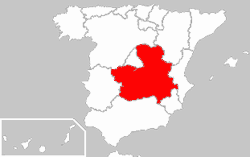
"La Mancha" means "the stain"... harsh on the citizens, but that's Spanish politics for you...
I don’t want this to be a “nearly not a casserole blog” so I’m going to loosely define a recent recipe as casserole … pollo en pepitoria. This is a recipe typical to Castillia-La Mancha. One of the 17 autonomous communities of Spain, Castillia-La Mancha is the central community of Spain (excluding Madrid). It is the flat land wherein much of Don Quijote (de la Mancha) is based. It is the 3rd largest community, with 79,463 km square and 9th in terms of population, with 1.8 m people.
Ingredients (for 4):
1 chicken
Flour
3 medium onions
3 garlic cloves
½ l of stock
½ cup of sherry or dry white wine
1 laurel leaf
100 g finely ground almonds
2 hard-boiled eggs
Saffron, salt and pepper
1 chicken
Flour
3 medium onions
3 garlic cloves
½ l of stock
½ cup of sherry or dry white wine
1 laurel leaf
100 g finely ground almonds
2 hard-boiled eggs
Saffron, salt and pepper

For the mise en place, finely slice the onions. I used a mandolin that we got in Japan. Crush the garlic with the fine end of a butcher knife.
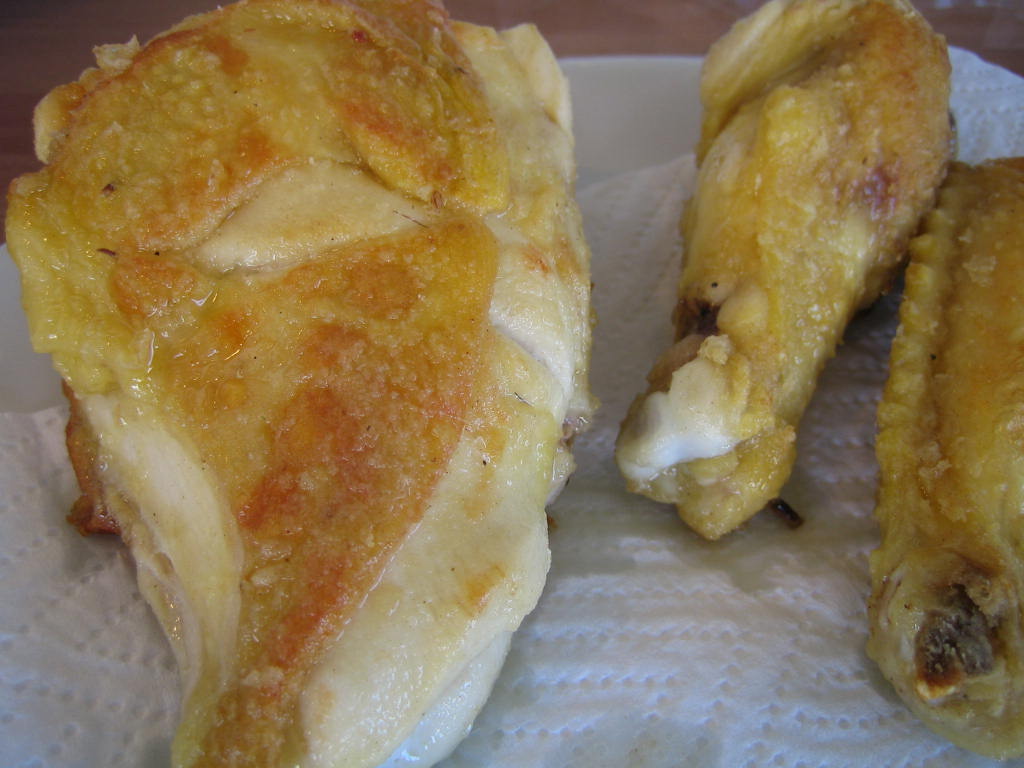
Cut the chicken into portion sized pieces, season and roll in flour. In a large casserole heat the oil and sauté the chicken over a high heat until well brown. In order to maintain the heat of the pan, add only a few pieces at a time.
Sieve the oil so that a good tablespoon of oil remains. Reduce the heat and sauté the onion and garlic until translucent. It is best to leave the lid on the pot at this point as it will build up the heat and effectively steam the onion rather than flame cook it. Stir in the stock, sherry, saffron and laurel leaf. In order to get the strongest flavour from the saffron, it is worthwhile to toast it in tinfoil over a flame.
THE LAID BACK ENDING: There is an option in the recipe now. We followed the low-maintenance route which basically left the casserole to simmer for 1 ½ to 2 hours, until the chicken is bland. 15 minutes before the end we added the finely ground almonds and the chopped eggs.
THE FOOD ACADEMIC ENDING: Penelope Casas recommends a slightly more comprehensive method; simmer for 10 minutes. Remove the chicken and bay leaf to a warm dish. Blend the casserole with the ground almonds. Return all the ingredients to the casserole. Cover and cook at 350 F for 20 minutes adding broth as required. Sprinkle the egg only 5 minutes from the end.
A bit about Saffron[ii]:

Image courtesy of Gernot Katzer’s spice page.
Imparting both an intense yellow colour and unusual flavour to food, saffron is a vital part of many Spanish dishes. It was brought to Spain by the Arabs. The name is actually derived from the Arabic for “thread”. Iran and Spain are the major exporters of the spice today.
It is the world’s most expensive spice. There are 3 stigmata per saffron flower. It takes about 80,000 flowers to produce 5 lb of stigma, which in turn dry down to about 1 lb (450 g) of saffron… this relates to a 1,000 metre square field or, because the stigma are so delicate, 12 days for an experienced picker. All of the stigma must be harvested on the same day that the flower begins to open (typically a busy day in late autumn).
Crocin is the name for the intense colorant in saffron. It is a carotenoid pigment made up of a sandwich of one pigment between two sugar molecules. The sugar is the reason that the usually oil-soluble pigment is actually soluble in water and hence particularly useful in cooking. Alcohol is commonly used in conjunction in order to dissolve additional fat-soluble carotenoids.
The flavour is described varyingly as “notable bitterness”, “penetrating”, “hay-like aroma”, “unique flowery”, “medicinal” or… “subtle”.
Vocab builder:
Trocear – divide
Salpimentar – babelfish defines this as “to salpimentar”; “to season” is somewhat closer
Estofar – sauté
Endnotes and acknowledgements:
[i] Penelope Casas “Food and wine of Spain”
[ii] Harold McGee “McGee on Food & Cooking: an encyclopaedia of kitchen science, history and culture”
Sunday, November 27, 2005
Arroz Negro (Black Rice) and a new Apartment
Arroz Negro (Black Rice with Calamari)

2. The cleaning process focuses on the various parts of the body. First you must reach into the head and remove the transparent cartilaginous shield from inside the body. This is the spine and is particular to squid and calamari, the octopus doesn’t have any.
3. Grasp the tentacles and pull firmly to remove. Squid and cuttlefish have 8 ‘arms’ and 2 tentacles. Octopus has 8 tentacles. Note: both Spanish and Catalans have 2 arms and 2 legs.
4. Rinse the body and discard the purplish-black membrane. Calamari have long triangular flaps running along side the body, these are located at the narrow end of the body, cut these off, but save to eat.
5. To ensure that the head is fully clean, wash it inside out.
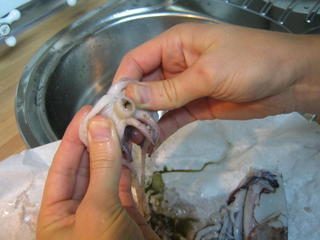
6. Next prepare the tentacles. Press the bunch away from you, the 'beak' will pop out. Pull away and discard. Be careful as this can cut you. I innocently thought the beak was something to do with the nose of the fish, I have since learnt it is the anus. I'm not sure how I feel about this.
7. Cut the tentacles just below the ink sac (visible as a purple bulge). Discard the remaining part.
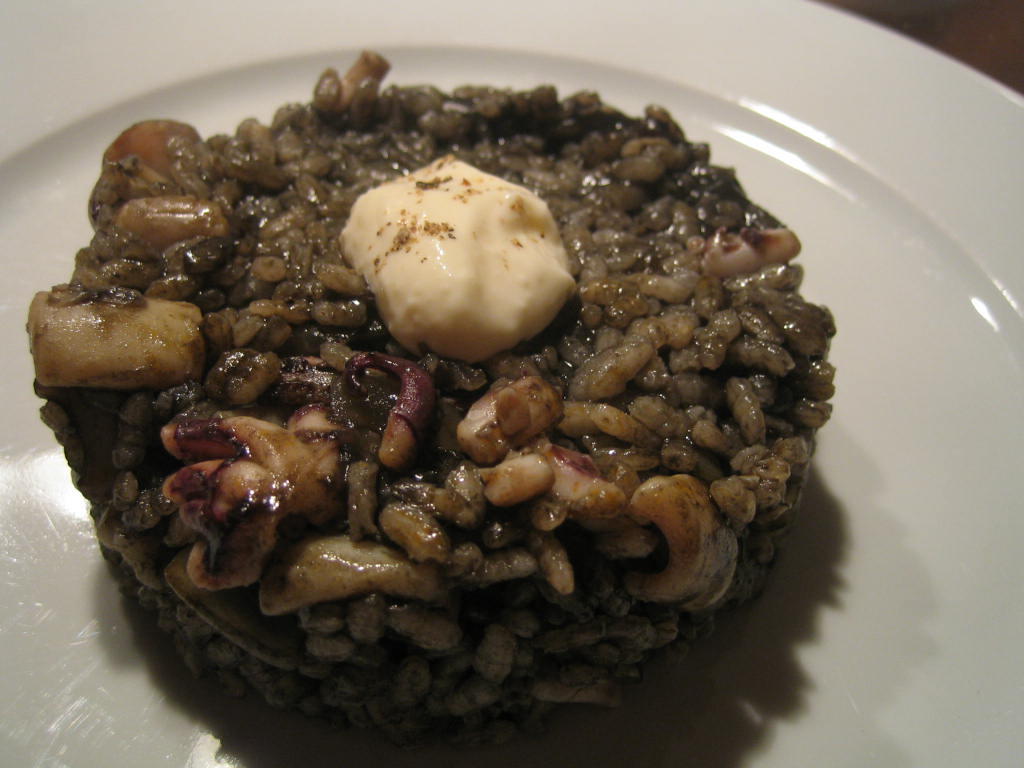
27-Nov-2005 Steve: This blog was written exactly a month ago. Despite the popularity of the dish I had been unable to answer a question that had occurred during the research into Calamar. Finally, yesterday, after unpacking Blanca's cookbooks from London, we found the answer and I could complete the recipe. Read on...
27-Oct-2005 Steve: It has been over a month, but we cooked last night for the first time in our new flat in Granada. In this blog I would like to acknowledge the contribution of various people and professions across the province of Granada to this inaugural meal:
- el notario – the town notary in Guadix
- el estanco – the newspaper stand
- el ayuntamiento – the town hall
- la dueña – the landlord
- la policía – the police
- el banco y el director de la sucursal – the bank and bank manager
- los padres – parents
- los tíos y primos – uncles, aunts and cousins
- el taller – the garage
- el portero – the porter
- la churrería – the churros restaurant
- el fontanero – the plumber
- el toldero – the awning guys
- las mudanzas – the removal company
- muebles morino – the useless kitchen fitters
- el electricista – the electrician
- el pintor – the painter
- la ferretería – the hardware store
- el tapicero – the upholsterer
- el corte inglés – supermarket where we bought the food
- and last, but by no means the least important… el butanero – the gas delivery man
As it was the first night, we wanted to cook something traditional. As we were completely wrecked, we also wanted to cook something simple. Blancs suggested arroz negro. This is a typical Spanish dish, originally from Barcelona and Valencia. With my newfound residence, strictly speaking, I should be boycotting Catalan recipes, but I'm Irish and, more importantly, people have been known to call this the "most delicious rice preparations ever invented"*. Simply put it is paella made with calamar, dyed with its own ink.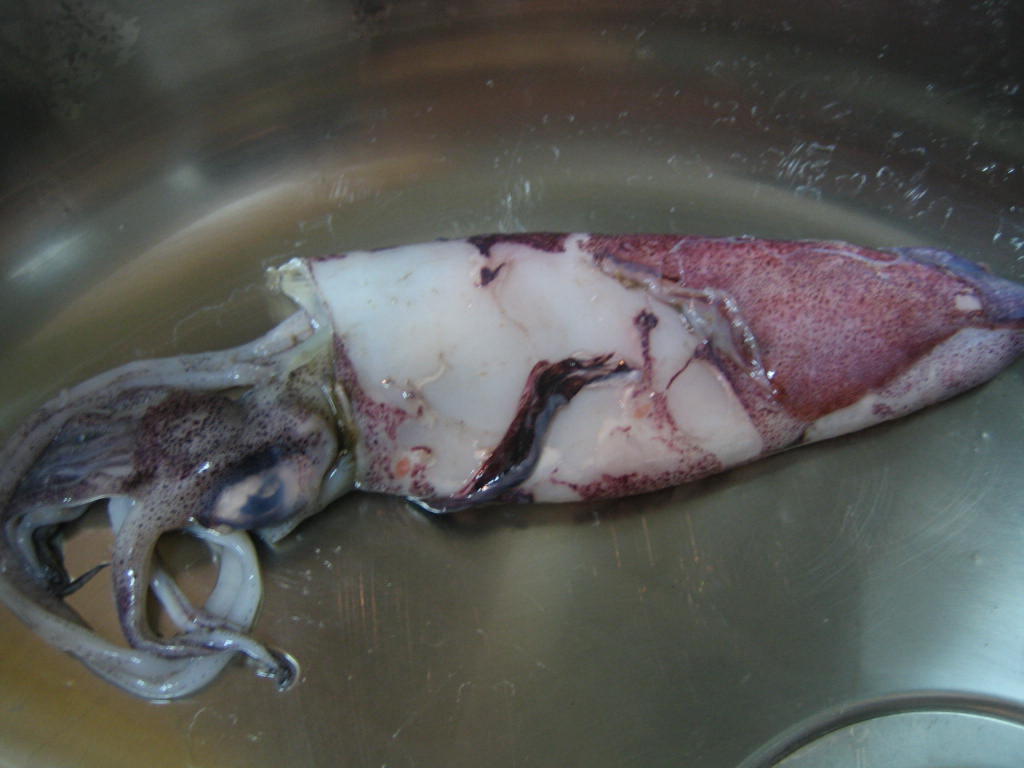
We did the shopping in El Corte Inglés, Blanca left me at the pescadería (fish counter). I managed to navigate my way to buying 3 medium calamar (calamari is Italian). I was quite happy with myself until later when she realised that I hadn’t asked for cleaned ones. Nevertheless, an unexpected techniques session came out of my mis-procurement… how to clean the calamari. This is the technique that Blancs learnt in Blagdens in London.
1. Calamari are shellfish; part of the molluscs family, as distinct from the crustacean decapods. They are cephalopods, meaning ‘head-foot’, mainly due to the proximity of their head and feet. Their sub-family is shared with squid, octopus and cuttlefish. They are the most advanced molluscs and, unlike the rest, they don’t have shells. The ink is used to evade capture… humans have a more mundane use in that it forms colour and flavour for this dish in particular.

2. The cleaning process focuses on the various parts of the body. First you must reach into the head and remove the transparent cartilaginous shield from inside the body. This is the spine and is particular to squid and calamari, the octopus doesn’t have any.
3. Grasp the tentacles and pull firmly to remove. Squid and cuttlefish have 8 ‘arms’ and 2 tentacles. Octopus has 8 tentacles. Note: both Spanish and Catalans have 2 arms and 2 legs.
4. Rinse the body and discard the purplish-black membrane. Calamari have long triangular flaps running along side the body, these are located at the narrow end of the body, cut these off, but save to eat.
5. To ensure that the head is fully clean, wash it inside out.

6. Next prepare the tentacles. Press the bunch away from you, the 'beak' will pop out. Pull away and discard. Be careful as this can cut you. I innocently thought the beak was something to do with the nose of the fish, I have since learnt it is the anus. I'm not sure how I feel about this.
7. Cut the tentacles just below the ink sac (visible as a purple bulge). Discard the remaining part.
Ingredients (for 2):
3 medium calamari
1 sack of ink (best frozen)
3 tbsp white wine
½ onion chopped
2 garlic cloves crushed
1 cup of medium-grain rice
3 ½ cups of warm fish stock (depends on the rice type)
1 tbsp olive oil
Salt and pepper to season
3 medium calamari
1 sack of ink (best frozen)
3 tbsp white wine
½ onion chopped
2 garlic cloves crushed
1 cup of medium-grain rice
3 ½ cups of warm fish stock (depends on the rice type)
1 tbsp olive oil
Salt and pepper to season
The following recipe is, as mentioned above, one that works. It is taken from Penelope Casas's "The Food and Wines of Spain". Heat a pan with oil over the flame. We used a wide, flat paella pan as the cooking method is principally about leaving the rice to settle and absorb the stock rather than stir like a risotto. Add the onion and cook until translucent. Add the squid and sauté 5 minutes. Add the garlic and cook for a moment. Cover and simmer for 30 minutes.
Add the stock (boiling hot) and rice and stir in the ink and wine. Note, ink is most easily used frozen as it is less likely to stain. Season with salt and pepper. Cooking times vary depending on the rice. We were cooking with Arroz Bomba de Calasparra, this is a medium grain rice from near Murcia. Bring to the boil and cook over a medium high heat, uncovered and stirring occasionaly, for 10 minutes until the rice is no longer soupy, but some moisture remains.
Transfer to a 160C oven. Bake 15 minutes, uncovered until the liquid is absorbed, but the rice not yet done. Remove from the oven, cover lightly with foil and let sit for 10 minutes. It is then ready to eat.
The paella dish is extremely wide, in order to retain the heat and moisture (thereby prolonging the cooking time) traditionally, cooks would often place a newspaper over the pan.

In Spain even the newspapers can cook paella
So what was the reason for the month's delay?
The recipe, as you can see, is pretty straight forward. We actually used a slight variation; sauté vegetables, add the calamar, add the rice. Overall cooking time for the calamar was about 25 minutes as opposed to about 80 minutes above. The flavour was great, but the calamar was quite tough.
As with many things, the problem (but not the solution) was brought to our attention in my research into calamar...
Cephalopods have extremely thin muscle fibres reinforced by about four to five times the amount of collagen in a normal fish. This makes their cooking somewhat unusual. McGee and Stephanie Alexander are adamant that they must be cooked either briefly (2-5 minutes to prevent the muscle fibers being broken down) or for a very long time (over 1 hour in order to breakdown the collagen). “In-between” cooking results in a tough, rubbery texture.
Blanca reckons that Penelope Casas has written "the best book on Spanish cooking by a non-national". She is either making a very subtle point about Catalan independence or is measuring her words. Either way, judging by the fact that she was, so far, the only author that was able to solve our calamar problem... I'm convinced.
Enjoy.
Monday, November 14, 2005
Los Piononos de Santa Fe
Piononos de Santa Fe
Pastry cream is a very versatile cream used in many cake and pastries. It is a thick custard cooked on the stove from milk, eggs, sugar, flour and cornstarch (as thickener). For the cream – boil the milk, sugar, cinnamon and lemon. Remove upon boiling. Beat the eggs and flour. Add the boiling milk. Return to a medium-high heat and whisk until it comes to the boil. Cool with a plastic wrap to prevent a skin from forming.
For the biscuit – beat the yolks with the sugar and milk. Heat and add the cornstarch. Beat the eggwhites until they peak. Add the eggwhites to the mixture. Pour onto baking paper in a linear fashion (approx 2 inches). Place in the oven for 10 minutes. Make a syrup with water, sugar and soak the genoise. Spread the pastry cream and roll. Sprinkle sugar on top and toast in the oven. Serve cold.
Vocab builder:
Empapar – to soak
Almibar – syrup
Almidón – cornstarch
Canela – cinnamon
Rallar – to grate
Regar – to irrigate
Placa - numberplate (you may well wonder how this made it into the vocab)
Harina pastelera – soft flour
Capitulación – capitulation
Rendición – surrender
Virrey – viceroy
Broadband connectivity in the South of Spain obviously felt that I was a little bit ahead of myself by blogging early last October. This is the reason for my one month absence. Hopefully this blog signifies service recommencing as normal.
------------ STOP PRESS "CASA YSLA Y LOS PINONOS" ------------
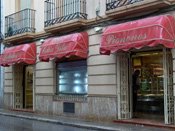
I have just been on the web to see if I could find a picture of the pastry shop where we had the famous Pionono. Not only did I find a picture, but a lot more about the Pionono. The pastelería is called "Casa Ysla" and is none other than the originator of the Pionono.
The history is amazing... in 1897 Ceferino Isla González (intern to Manuel “el Gallego”) opened his own store on Calle Real, Santa Fe. He was very devoted to the Virgin and wanted to pay homage to Pope Pius who, in 1854 had issued the infallibly defined the "dogma of the immaculate conception" (essentially that Mary was free from original sin). In this way, he decided to create a new pastry. The aim was to not only carry the name of the pope, but also his likeness; cylindrical and somewhat chubby.
In 1916, the King (Rey D. Alfonso XIII), whilst visiting a friend on a nearby farm, ate some Piononos for his afternoon snack. He was so taken by the delicious flavour that gave the title of official providers to the Royal House to Casa Ysla.
... Spain... go for the pastry and stay for the politico-religious history.

You could easily drive through the little town of Santa Fe without realising its historical significance.
- This small town of about 13 thousand (located about 11 km from Granada city) was built in 1490 by Isabel and Fernando as the base camp for their assault on Granada, the last Moorish outpost on the Iberian Peninsula. It was strategically built blocking the Río Genil and hence communication between Granada and North Africa.
- It was here that the monarchs signed “Acuerdos de Capitulación de Santa Fe” (25th April, 1491). This was the truce wherein Boabdil (last Nazarí king of Granada) agreed the handover of his palace and city. Later, whilst leaving the city, Boabdil looked upon Granada for what would be the last time; he began to cry. In what is one of Spain’s most poignant quotes, his mother said llora como una mujer lo que no has sabido defender como un hombre (to cry as a woman for that which he could not defend as a man).
- In what was a busy year, the Monarchs also signed the other “Las Capitulaciones” on 17th April, 1492. These named Christopher Columbus the “Major Admiral of the Ocean Sea, Viceroy and Governor General of the Discovered Lands” and finaly approved the financing of his trip to discover an alternate route to the Indies.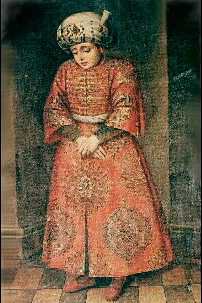
Besides visiting the town for its historical significance, you can enjoy its culinary achievement; Piononos. This pastry is named in honour of Pope Pio IX (1792-1878); pope for a record 31 years and often lampooned by his Italian name Pio No No (wikipedia explains that he was considered quite conservative).
I had eaten Piononos loads before and never been wowed (upon reading this, local outrage may cutoff my future blog contributions). Their home rightly changed this opinion, but probably means that I’ll only ever eat them in Santa Fe. They are truly delicious; a custard filled pastry topped by burnt sugar.
Double risk on my point… we haven’t yet tried the recipe and it is translated… Blanca explains that this is basically a double recipe; one for pastry cream (creme patissiere) and the other for genoise.
For the pastry cream:
¼ l milk
200 g sugar
2 eggs
40 g soft flour
½ tsp lemon grated
For the biscuit:
3 yolks egg
5 whites egg
60 g sugar
80 g cornstarch
2 sp cold milk
1 cup rum
25 g cinnamon in dust
¼ l milk
200 g sugar
2 eggs
40 g soft flour
½ tsp lemon grated
For the biscuit:
3 yolks egg
5 whites egg
60 g sugar
80 g cornstarch
2 sp cold milk
1 cup rum
25 g cinnamon in dust
Pastry cream is a very versatile cream used in many cake and pastries. It is a thick custard cooked on the stove from milk, eggs, sugar, flour and cornstarch (as thickener). For the cream – boil the milk, sugar, cinnamon and lemon. Remove upon boiling. Beat the eggs and flour. Add the boiling milk. Return to a medium-high heat and whisk until it comes to the boil. Cool with a plastic wrap to prevent a skin from forming.
For the biscuit – beat the yolks with the sugar and milk. Heat and add the cornstarch. Beat the eggwhites until they peak. Add the eggwhites to the mixture. Pour onto baking paper in a linear fashion (approx 2 inches). Place in the oven for 10 minutes. Make a syrup with water, sugar and soak the genoise. Spread the pastry cream and roll. Sprinkle sugar on top and toast in the oven. Serve cold.
Vocab builder:
Empapar – to soak
Almibar – syrup
Almidón – cornstarch
Canela – cinnamon
Rallar – to grate
Regar – to irrigate
Placa - numberplate (you may well wonder how this made it into the vocab)
Harina pastelera – soft flour
Capitulación – capitulation
Rendición – surrender
Virrey – viceroy
Broadband connectivity in the South of Spain obviously felt that I was a little bit ahead of myself by blogging early last October. This is the reason for my one month absence. Hopefully this blog signifies service recommencing as normal.
------------ STOP PRESS "CASA YSLA Y LOS PINONOS" ------------
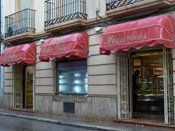
I have just been on the web to see if I could find a picture of the pastry shop where we had the famous Pionono. Not only did I find a picture, but a lot more about the Pionono. The pastelería is called "Casa Ysla" and is none other than the originator of the Pionono.
The history is amazing... in 1897 Ceferino Isla González (intern to Manuel “el Gallego”) opened his own store on Calle Real, Santa Fe. He was very devoted to the Virgin and wanted to pay homage to Pope Pius who, in 1854 had issued the infallibly defined the "dogma of the immaculate conception" (essentially that Mary was free from original sin). In this way, he decided to create a new pastry. The aim was to not only carry the name of the pope, but also his likeness; cylindrical and somewhat chubby.
In 1916, the King (Rey D. Alfonso XIII), whilst visiting a friend on a nearby farm, ate some Piononos for his afternoon snack. He was so taken by the delicious flavour that gave the title of official providers to the Royal House to Casa Ysla.
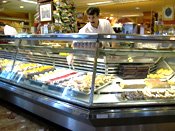
... Spain... go for the pastry and stay for the politico-religious history.
Subscribe to:
Posts (Atom)