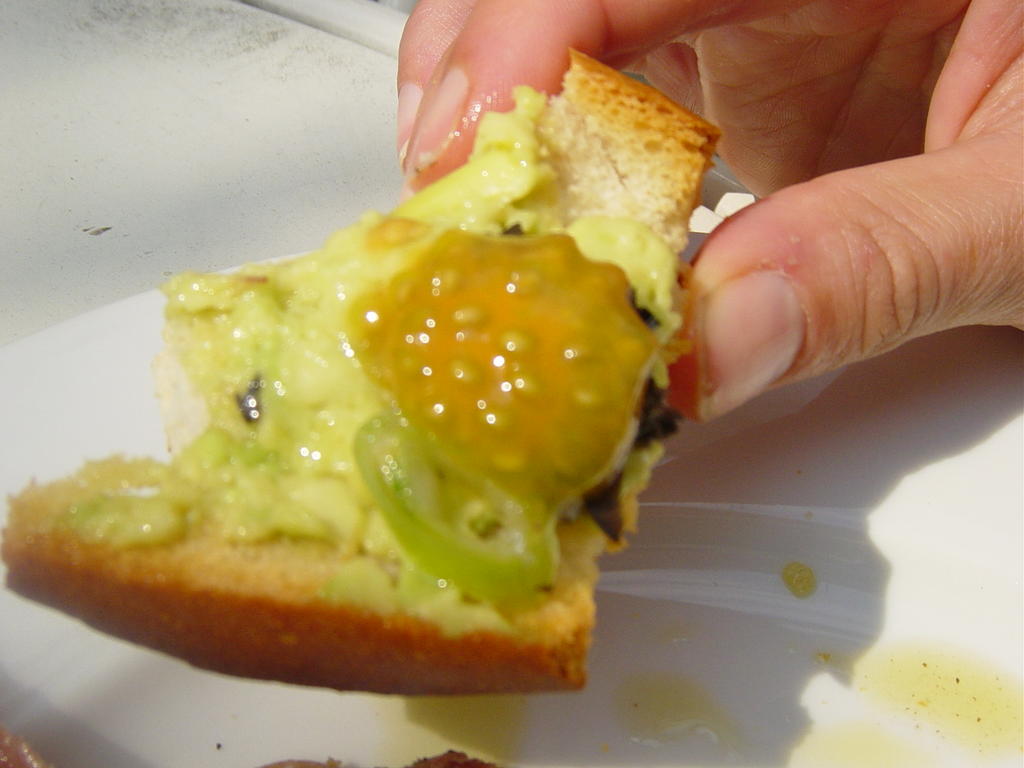
I'll be blogging the recipe later.

| Never ripen after picking | soft berries, cherries, citrus, grapes, litchis, olives, pineapple, watermelon |
| Ripen only after picking | avocados |
| Ripen in colour, texture, but not sweetness | apricots, blueberries, figs, melons, nectarines, passionfruit, peaches |
| Get sweeter after picking | apples, kiwi, mangos, papayas, pears |
| Ripen in everyway after picking | bananas |
[II]
Category One receive all of their sugar from the parent plant. They may decrease in acidity, but will never get sweeter once off the vine. Category Two plants send a chemical that actually inhibit ripening, the fruit must be removed in order to stimulate the process. Category Three contain no starch, once off the vine, they will not create sweetness. These must be bought physically mature. Category Four have large supplies of starch, they improve in sweetness even off the plant. Category Five converts nearly all of its ample starch to sugar.
Depressingly for us, no one actually classifies tomatoes in the above matrix. From reading McGee, they seem to be a cross of Categories Three and Four. They do store starch in their wall tissue, but not as much as, say, apples. The rule of thumb should be to allow them ripen fully on the vine in order to have the fullest flavour[III]. This is sadly at odds with commercial reality. One tip that may help us; store tomatoes at about 10 C in order to maintain their flavour (due to a critical flavour compound, (Z)-3-dexenal, which disappears when chilled).

The sweet, meaty plum walls balance the more acidic (citric and malic) flavours and aromas of the jelly and skin. You don't need to peel. Additionally, don't worry about the loss of nutrients; almost 0% of minerals and about 5% of vitamins are lost during cooking tomatoes. Bring the tomatoes to the boil in the vegetable stock. Leave to simmer for 10 minutes. Add the remaining ingredients and simmer for 20 – 30 minutes. Puree the soup. Pass the whole thing through a sieve and serve.
Second time around, this was a fantastic soup. Really luxurious and smooth. I recommend plenty of pepper.
Sources
[I] Shirley O. Corriher "Cookwise"
[II] Jeffrey Steingarten "The Man Who Ate Everything"
[III] Harold McGee "Food & Cooking"
Note: This blog comes partly inspired by the UK's best food programme; “Full on Food”. Anyone who hasn't had the chance of seeing should watch it.
Technorati Tags: tomato soup ripeness food


Melt the butter with olive oil in a large, heavy saucepan over a low heat. Add and cook the carrots, onions and courgette until soft. It is obviously best to cook the carrots slightly longer. Increase the heat and stir in the rice. Stir the rice (about 3 mins.) until a white dot remains in the centre of each grain. Add the wine and continue stirring until all is absorbed.
During this time, keep the stock (with crushed saffron) simmering. Start adding to the rice, ladle at a time, waiting for absorption to complete before adding the next. Continuous stirring is required, this unique method abrades the rice and removes the starch from the plant into the liquid to produce a creamy consistency. The evaporation of the stock means that more is required, thus producing a more concentrated flavour in the dish. All recipe books are in agreement of the “magic 20 minutes” required to cook risotto. The clock starts from the point of adding the first ladle of stock.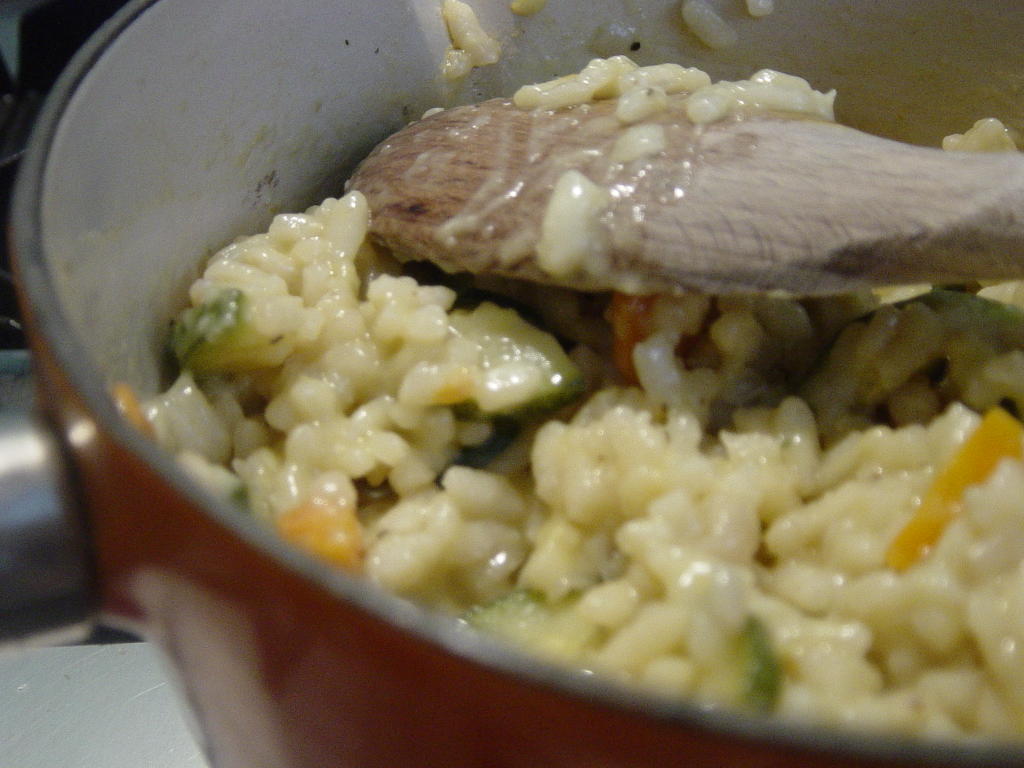
When ready, the rice should be tender, but still firm to the bite. Take the risotto off the heat. Fold in the parmesan and season according to taste. As you will see below, risotto is suitable for reheating. In fact, many restaurants prepare the labour intensive dish upfront and reheat. This is not necessarily “best practice”, but is a useful cheat.
The science…
Brief History of Rice[i]
Rice has been cultivated in Asia as early as 3500 BC, Alexander the Great is credited with having introduced it to the Western world about 335 BC. The Moors planted rice in Andalucia (in gratitude the Spanish kicked them out), Spain in the eight century AD and by 10 AD it was being cultivated in Italy.
Types of Starch[ii]
I thought this section would be called “types of rice”, but it turns out that we need to know about starch before we can know anything about rice. McGee explains how grains and legumes contain a heap of starch and this plays a large role in the texture of the cooked end product and their products.
Plants store glucose as starch in two different forms: amylose and amylopectin. Amylose molecules are structured and ordered; they’re made from about 1,000 glucose sugars and are mainly one extended chain. Amylopectin is an unruly molecule; it is made from 5,000 to 20,000 sugars and has hundreds of short branches. Cooking starch is all about the application of steam or boiling water in order to break down the cell walls and free the starch. This process converts solid starch into starch-water gel (hence it’s called gelation). The ordered clusters of amylose require more heat and water in order to break them apart.
Other amylose traits (amylopectin tend to exhibit the opposite)[iii]
- it is a more effective thickener,
- the gel tends to be opaque,
- sauces made from amylose tend to not freeze well,
- amylose based sauces tend to thicken at a higher temperature
Types of Rice The rice lineup (from left to right): long-grain basmati rice, medium-grain arborio and short-grain sushi rice.
There are more than 40,000 varieties of rice, but we can break these down. All rice contains at least 70% amylopectin (making them sticky), but some contain more. The different types of rice are judged on their relative amounts of amylose and amylopectin. There are two sub-species of Oryza sativa. Indica rice are grown in the lowland tropics, they produce a long, firm grain that is rich in amylose starch. Japonica is the other rice, it is found in the upland tropics and temperate climates (Japan, Italy and California). It contains less starch and produces a shorter, stickier grain. There are 3 broad types of rice; long, medium and short grain.
Long-grain rice (aromatic rices such as basmati, patna, Thai fragrant and Jasmine) are 4-5 times long as wide and high in amylose. They cook separate and fluffy (due to less amylopectin) and cool hard due to the setting of the amylose. It is predominantly used in savoury dishes; pilaffs, curries etc. The fact that long-grain cools hard means that it is generally unsuitable for salads and sweets, this can be countered if mixed with a dressing while still warm.
Medium-grain rice is predominantly grown in the temperate zones mentioned above. It is higher in amylopectin and does not harden when cooked and cooled. This is a favourite for the Italian risotto and Spanish paella. As noted above, the quantity of amylopectin in medium-grain rice makes it quite amenable to reheating.
Special mention to the Mr. Risotto. This is a fat variety of medium-grain rice. It typically has an small area of underdeveloped starch in the center which, combined with the cooking method keeps the center hard whilst the rest is creamy. This produces the famous "risotto bite".
Short-grain rice (aka sushi rice) is only a little longer than it is wide; it is high in amylopectin and cooks soft and sticky. Due to the fact that compact moist grains stick together, they are a preferred when eating with chopsticks. There is an extreme version of short-grain rice called sticky rice (glutinous rice); this is used in East Asian dishes and desserts.
Cooking Rice
There are two methods of cooking rice[iv]; the boiling method and the absorption method. From what I can tell, risotto is neither of these (I guess that means there are 3 methods of cooking?) I’ll do practical examples of the other two later.
All this talk of rice has made me miss Japan, I always wanted to go to a paddy field in Japan. I never made it, but Taro gave me some informal classes. The kanji for paddy field is 田, pronounced “ta”. This is a kind of ideographical word as it looks somewhat like fields from the air… It also forms one of the most common names in Japan (words taken from nature form 30 of the top 100 names in Japan).
Endnotes & acknowledgements:
[i] Stephanie Alexander “the cook’s companion”
[ii] Harold McGee “McGee on Food & Cooking: an encyclopaedia of kitchen science, history and culture”
[iii] Shirley O. Corriher “Cookwise”
[iv] Leiths Techniques Bible
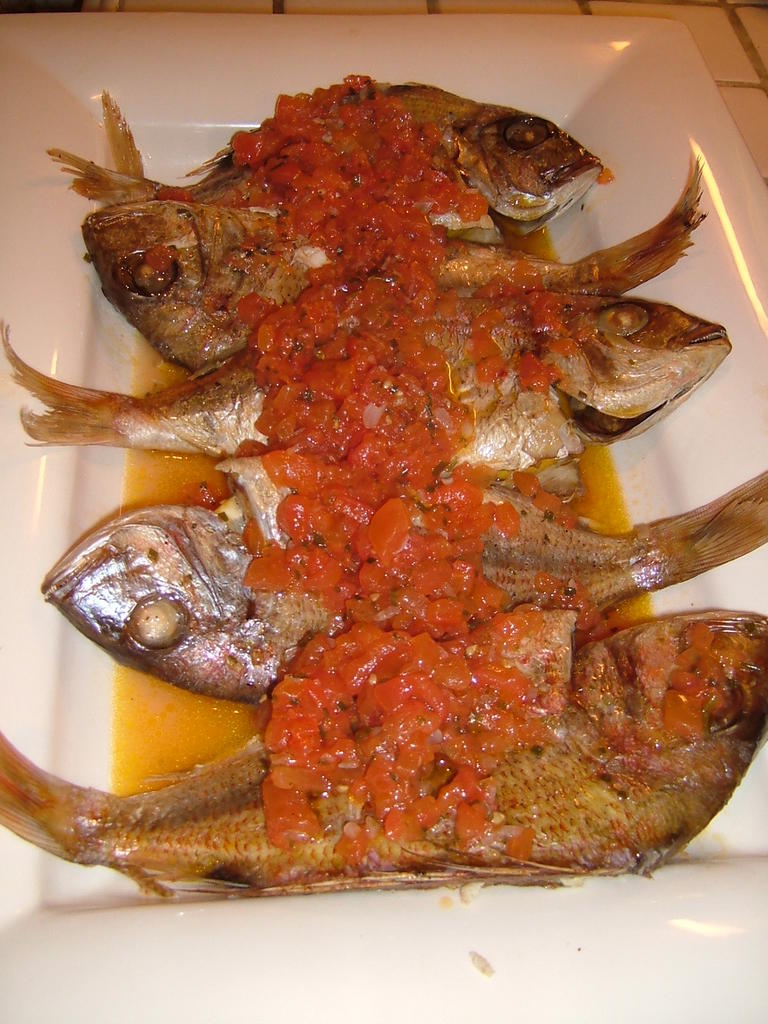
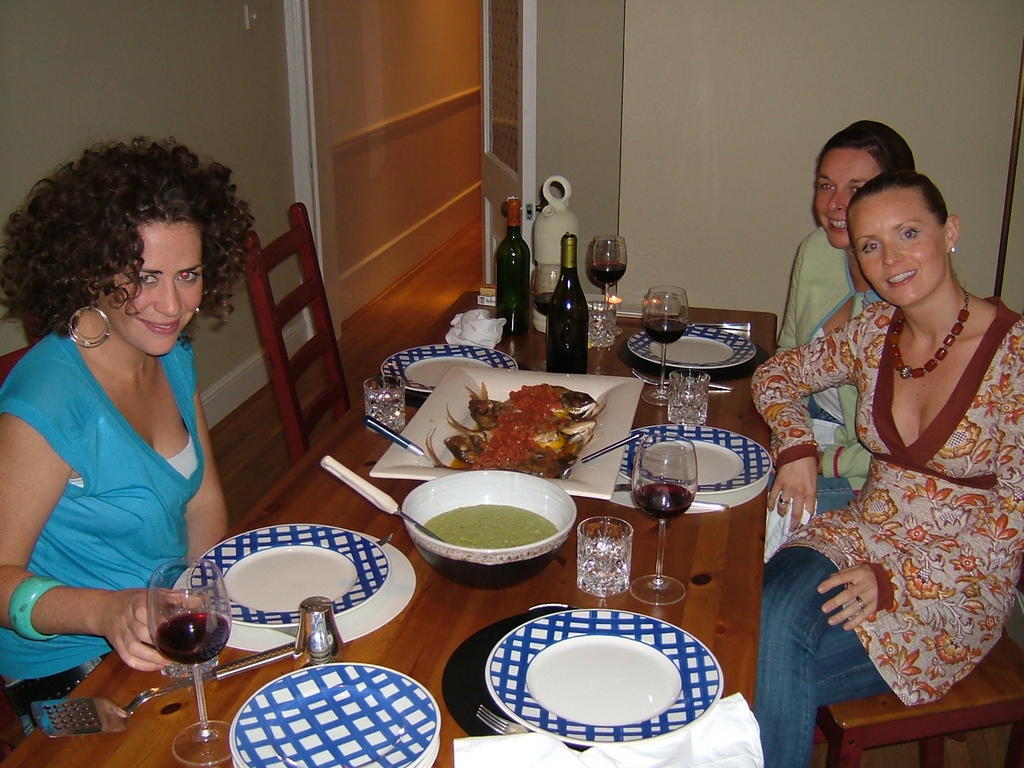
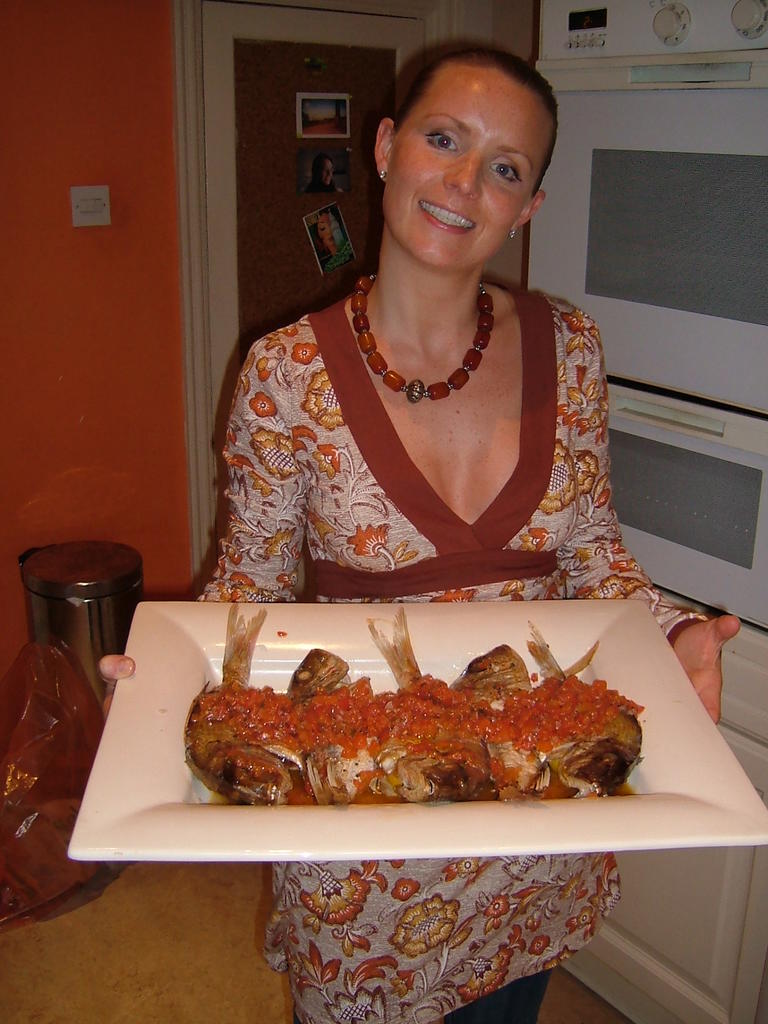


 ...david attenborough voice over: "...from the distance this jungle archipelago looks like slices of monkfish grilled with a great salsa verde"
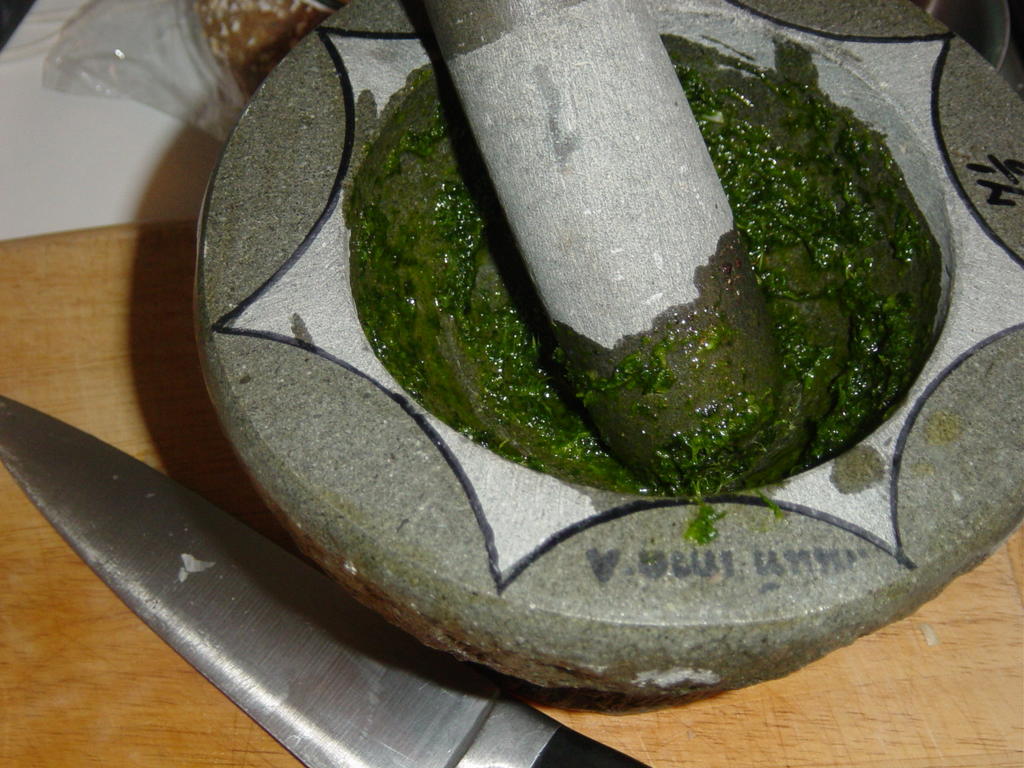
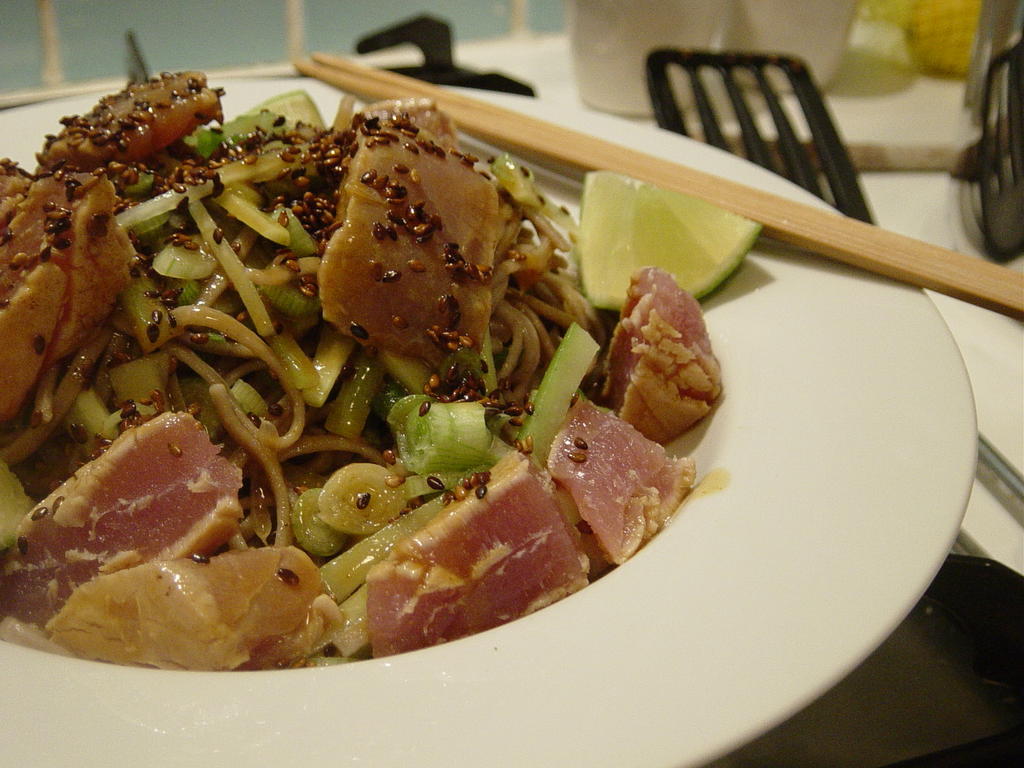
Last night, cooking from “Fish”, we made a variation of their salsa verde recipe. From the one meal I've cooked, I can see this is a cool book. Blanca recommends it on the basis that it is co-authored by a cook (Sophie Grigson) and her husband fishmonger (William Black)... thus having taste and authority. I recommend it for the best cover of any food book I've seen so far; a mackerel on a red background (check the amazon link).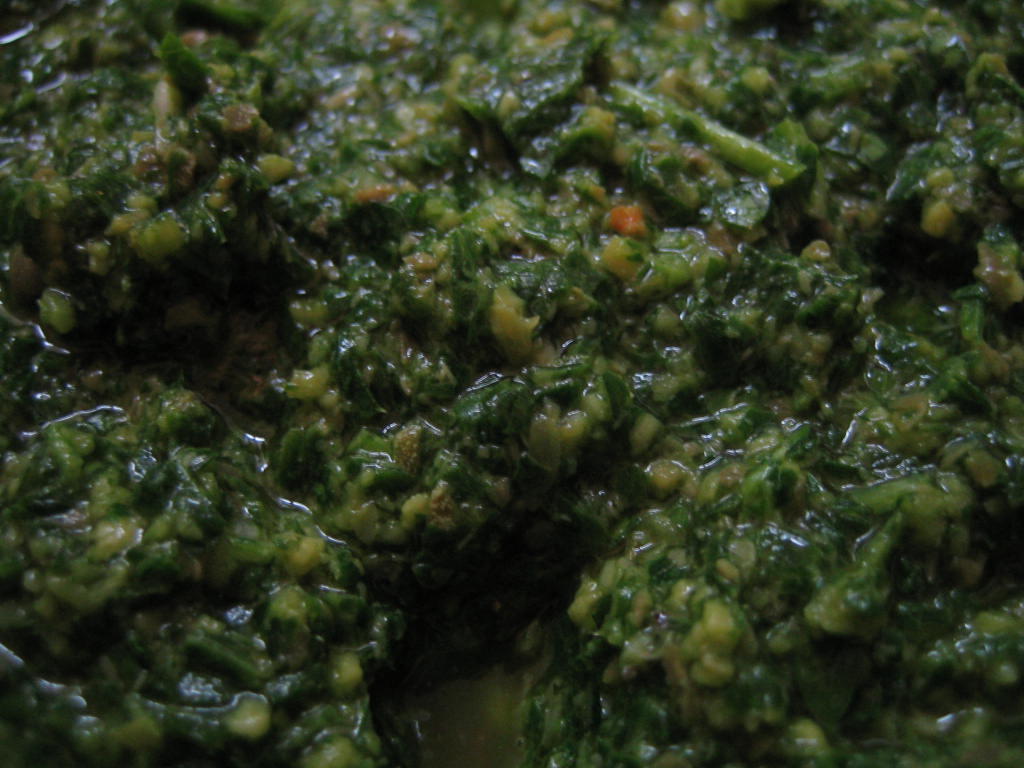

A little confession here; I do love hummus, but have always struggled with its kind of dull pita friend. Everyone knows that men are shallow and that we only hang out with dips that have cool and interesting friends. Fate stepped in with a nice solution this weekend. I found myself in a “pita moment” (hah hah, I’m hoping this takes off); watching morning TV on Saturday morning. Worse still, I found myself watching a food program. Rachel Allen was presenting her creatively titled “Rachel’s favourite foods” on the BBC. One recipe that appealed to me was for spicy pita bread, intrigued we decided to see if she had recommended a good solution for boring pita bread...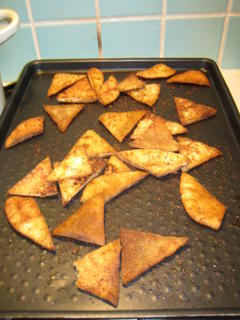
Pita Bread
Cumin
Sumac
Olive oil
Bit of trivia here; cumin (I still pronounce this in the feisty “come-in” style rather than “queue-min”) is the second most popular spice in the world (to black pepper). Sumac is a berry from the Mediterranean and the Middle East, it is sour (similar to lemon).
Cut the pita bread into small triangles. Mix with moderate amount of olive oil in a bowl (warning; I probably added too much olive oil, but that’s ok as I’m supporting Spanish industry). Add a teaspoon full of each of the spices according to taste. Bake in an oven until golden brown. This is really good, nice mellow spices and a toasted crunch that really improves on the regular pita bread.
In the course of writing this blog, I have come across 7 different spellings of hummus, hummos, hummous, humus, homos, hoummous and hoummos. I’m thinking of calling it “Steve’s Garbanzo and Tahini Paste”, it is simple and I’m sure many of you have made it before, however I’ll quickly describe:
1 can of chickpeas
2 cloves garlic, peeled
2 tablespoons tahini
Juice of 1 lemon
Salt and pepper to taste
Water (may be required according to mixture)
Cumin or chilli (optional & to taste)